Spontaneous coronary artery dissection in a male patient with haemophilia A: a case report
European Heart Journal - Case Reports


Abstract
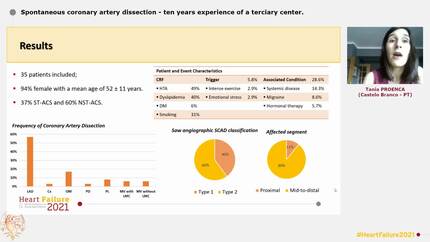
Spontaneous coronary artery dissection (SCAD) is characterized by the unexpected formation of an intramural haemorrhage within the wall of an epicardial coronary artery with or without an intimal tear, resulting in an acute coronary syndrome. Haemophilia A and B are inherited X-linked recessive bleeding disorders caused by the absence or dysfunction of clotting factors VIII (FVIII) or IX.
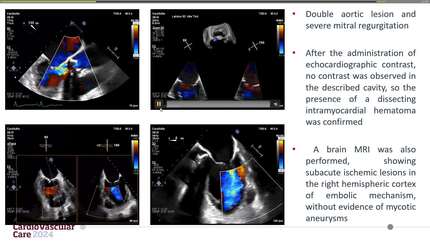
A 50-year-old male patient with a history of haemophilia A, type 2 diabetes and smoking presented to our facility with prolonged chest pain. His laboratory results revealed increased myocardial biomarkers and an elevated activated partial thromboplastin time despite the absence of previous bleeding tendencies or coagulation factor replacement therapy. Non-ST-elevation myocardial infarction was suspected, and coronary angiography detected severe stenosis in the left circumflex artery. Intravascular ultrasound confirmed an intramural haematoma without an intimal tear, resulting in an SCAD diagnosis. The patient, with no bleeding complications, was conservatively treated with medications, including aspirin and bisoprolol. A coronary computed tomographic angiography (CCTA) on day 3 revealed haematoma resolution, and the patient was discharged on day 11. CCTA at 8 months detected the disappearance of the previously seen intramural haematoma.
We revealed two important clinical issues: (i) SCAD in a male patient with haemophilia and (ii) the usefulness of CCTA in observing SCAD lesions.
Contributors

Mitsukuni Kimura
Author
Yasuhiro Nakano
Author
Kotaro Abe
Author

Rita Pavasini
Author
Alexandru Patrascu
Author
Matteo Arzenton
Author
Emmanouil Mantzouranis
Author
You may be interested in