Suspected de novo heart failure in outpatient care: the REVOLUTION HF study
European Heart Journal


Abstract
Ambulatory patients presenting with signs or symptoms of heart failure (HF) should undergo natriuretic peptide testing. Rates of death, HF hospitalization, and healthcare costs were examined in patients thus identified with suspected
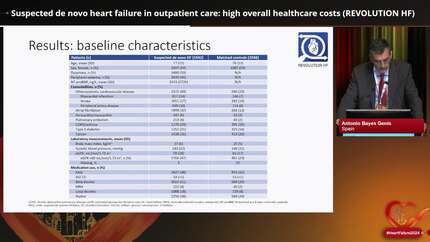
This population-based study (REVOLUTION HF) encompassing two large healthcare regions in Sweden examined patients who presented to outpatient care for the first time between 1 January 2015 and 31 December 2020, who had a recorded sign (peripheral oedema) or symptom (dyspnoea) of HF, and whose N-terminal pro-B-type natriuretic peptide (NT-proBNP) measured >300 ng/L within ±30 days of that sign or symptom. Characteristics, outcomes, healthcare patterns, and healthcare costs for these patients were followed for 1 year. Comparisons were made with matched controls without history of HF, its signs, its symptoms, or elevated NT-proBNP.
Overall, 5942 patients (median age 78.7 years; 54% women) presented with suspected
Patients with suspected HF and elevated NT-proBNP had high mortality and morbidity in the weeks after presentation, and accrued substantial healthcare costs, highlighting an urgent need for prompt identification, evaluation, and treatment of HF.
Contributors

Lisa Anderson
Author


Katrina Mullin
Author
Stefan Gustafsson
Author

Giuseppe M C Rosano
Author
St Georges Medical School London , United Kingdom of Great Britain & Northern Ireland
Johan Sundström
Author
You may be interested in