Type D personality as a risk factor for 3-year cardiovascular events in patients with coronary artery disease and their spouse: a prospective cohort study
European Journal of Preventive Cardiology


Abstract
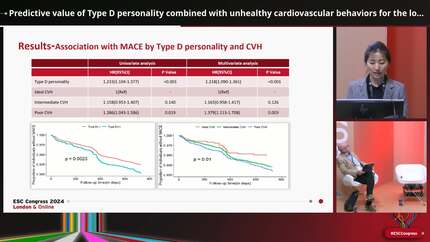
Type D personality has been established as an independent psychological risk factor for adverse outcomes in coronary artery disease (CAD) patients. However, research on the association between Type D personality and cardiovascular events in couples is limited. This study investigated the correlation between Type D personality and cardiovascular outcomes among CAD patients and their spouses.
This prospective cohort study included 4035 CAD patients for first coronary intervention therapy and their spouses, recruited from January 2017 to July 2020. Type D personality, anxiety, depression, and baseline clinical data were assessed for both partners. The major adverse cardiac event (MACE) rate of both CAD patients and their spouses was analysed after a 3-year follow-up period. A total of 871 CAD patients and 234 spouses developed MACE during the follow-up period. The Cox proportional hazards regression analysis revealed that the Type D(+) patient/Type D(+) spouse group exhibited the highest risk of 3-year MACE in both patients [hazard ratio (HR), 3.834; 95% confidence interval (CI), 2.947–4.987;
This study suggests that having Type D personality, either in the CAD patient or their spouse, is associated with an increased risk of adverse cardiovascular outcomes in both individuals. Accordingly, the assessment of Type D personality in both partners and the development of tailored, couple-centred interventions are warranted.
Contributors

You may be interested in