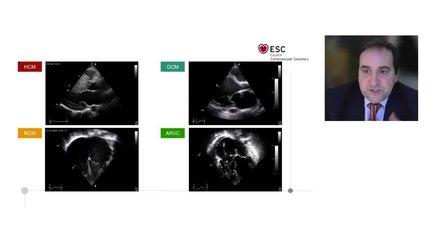
The ‘Padua classification’ of cardiomyopathies into three groups: hypertrophic/restrictive, dilated/hypokinetic, and scarring/arrhythmogenic
European Heart Journal Supplements


Abstract
The newly proposed classification of cardiomyopathies, referred to as ‘the Padua Classification’, is based on both pathobiological basis (genetics, molecular biology, and pathology) and clinical features (morpho-functional and structural ventricular remodelling as evidenced by cardiac magnetic resonance). Cardiomyopathies are grouped into tree main categories and characterized by a designation combining both ‘anatomical’ and ‘functional’ features: hypertrophic/restrictive, dilated/hypokinetic, and scarring/arrhythmogenic; each cardiomyopathy group includes either genetic or non-genetic aetiologic variants. This novel approach aims to enhance the diagnostic accuracy and to support ‘disease-specific’ therapeutic strategies, with the objective to improve patient management and outcome.
Contributors



Barbara Bauce
Author
Maria Bueno Marinas
Author
Chiara Calore
Author
Rudy Celeghin
Author
Alberto Cipriani
Author
Monica De Gaspari
Author
Federico Migliore
Author
Martina Perazzolo Marra
Author
Kalliopi Pilichou
Author
Ilaria Rigato
Author
Stefania Rizzo
Author
Annalisa Angelini
Author
Alessandro Zorzi
Author
Gaetano Thiene
Author

You may be interested in