Profiling heart failure with preserved or mildly reduced ejection fraction by cluster analysis
European Heart Journal - Quality of Care and Clinical Outcomes


Abstract
Significant knowledge gaps remain regarding the heterogeneity of heart failure (HF) phenotypes, particularly among patients with preserved or mildly reduced left ventricular ejection fraction (HFp/mrEF). Our aim was to identify HF subtypes within the HFp/mrEF population.
K-prototypes clustering algorithm was used to identify different HF phenotypes in a cohort of 2570 patients diagnosed with heart failure with mildly reduced ejection fraction or heart failure with preserved left ventricular ejection fraction. This algorithm employs the k-means algorithm for quantitative variables and k-modes for qualitative variables.
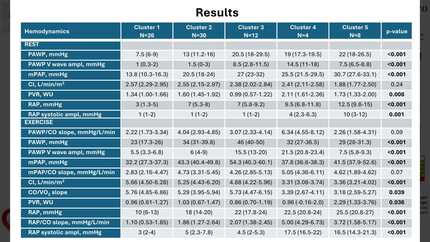
We identified three distinct phenotypic clusters: Cluster A (
Cluster analysis identified three distinct phenotypes within the HFp/mrEF population, highlighting significant heterogeneity in clinical profiles and prognostic implications. Women were classified into two distinct phenotypes: low-risk women and diabetic women with high mortality rates, while men had a more uniform profile with a higher prevalence of respiratory disease.
Contributors

Lourdes Vicent
Author
Nicolás Rosillo
Author

Guillermo Moreno
Author
Pablo Pérez
Author
José Luis Bernal
Author
Germán Seara
Author
Rafael Salguero-Bodes
Author
Fernando Arribas
Author
Héctor Bueno
Author
You may be interested in