Assessing handheld echocardiography: can it reliably detect HVD and LVSD compared to comprehensive echo?
European Heart Journal - Cardiovascular Imaging


Abstract
Hand held echocardiography (HHE) and abbreviated protocols (AP) offer the opportunity to widen accessibility in the community. There remain doubts about the sensitivity of these techniques to detect clinically relevant pathology when compared with standard transthoracic echocardiography (TTE). We therefore compared TTE in patients identified with significant left sided valve disease (VHD) or Left ventricular systolic dysfunction (LVSD) for agreement between the two tests.
Patients attending a community detection program underwent HHE using an AP on the GE Vscan Extend platform. The AP included parasternal long axis view, four chamber view and three chamber view, with and without colour. Those adjudicated to have anything more than trivial disease underwent full TTE. All adjudications were made by an accredited sonographer. The two tests were examined for agreement .
Of the 518 patients evaluated in the community program, 73 TTE’s were available for comparison with handheld AP studies, which were identified as having potentially significant HVD or LVSD. Among these there were 67 identified with HVD , 39 aortic (26 regurgitation, 13 stenosis or calcified )and 41 mitral (39 regurgitation, 2 stenosis).
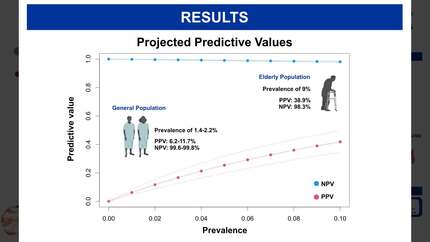
Comparing both studies, aortic regurgitation (AR) had the highest kappa values (0.88), and showed high specificity (95%) and sensitivity (93%). The kappa value for MR was 0.37 with high sensitivity (95%) and low specificity (41%). This is primarily due to mild MR seen during initial HHE, which appeared to be trivial or absent at the time of TTE. Conversely, calcified mitral and aortic valves showed the lowest kappa values (0.48 and 0.54) and the lowest sensitivity and specificity (50% and 99%) and 86% and 89%. For HVD, TTE identified 39 studies for MR, 2 for MS or a calcified MV, 30 for AR and 13 for AS or calcified aortic valve (for MR, 6 were moderate/severe, for AR, 4 were moderate/severe and for AS, 2 were moderate/severe.
For those with suspected LVSD on HHE, 4 studies did not show LVSD on TTE. Additionally, 1 case of LVSD was newly identified on comprehensive echocardiography. The kappa for LVSD was 0.74 with a sensitivity of 90% and a specificity of 95%.
2 studies of AR on HHE were not detected on TTE, 20 cases of MR, 7 cases of AS/Calcified AV and 1 for MS/Calcified MV.
These results suggest that abbreviated echo using HHE shows variable reliability. The detection of impaired LV and aortic regurgitation are reliable with other lesions less so. Improved technology and machine learning based detection and analysis are likely to improve the technique.


You may be interested in