Influence of right ventricular function on medium and long-term mortality after percutaneous aortic valve implantation in elderly patients with severe aortic stenosis.
European Heart Journal - Cardiovascular Imaging


Abstract
Right ventricular (RV) function is a potent marker of morbidity and mortality in heart failure and other cardiovascular diseases. However, the prognostic value of right myocardial function in aortic stenosis (AS) treated with a percutaneous aortic valve implantation (TAVI) is not well defined.
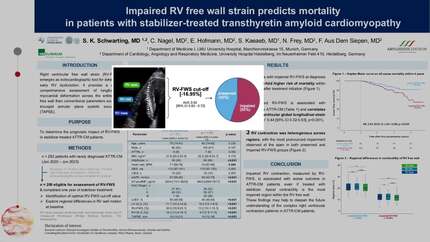
In the present study, we aim to analyze the impact of two relevant RV function parameters, TAPSE and right ventricular longitudinal strain, measured in the pre-TAVI study, on medium- and long-term mortality in elderly patients with severe AS.
We included 180 consecutive patients with severe AS who underwent TAVI implantation between February 2018 and February 2020. We analyzed the pre-TAVI echocardiogram (TTE) performed on the same day as the procedure. The variables analyzed were TAPSE and free wall right ventricular strain (FW-RVS). We studied the implications of both parameters on medium-term (the first year after the intervention) and long-term (2 years after TAVI implantation) mortality.
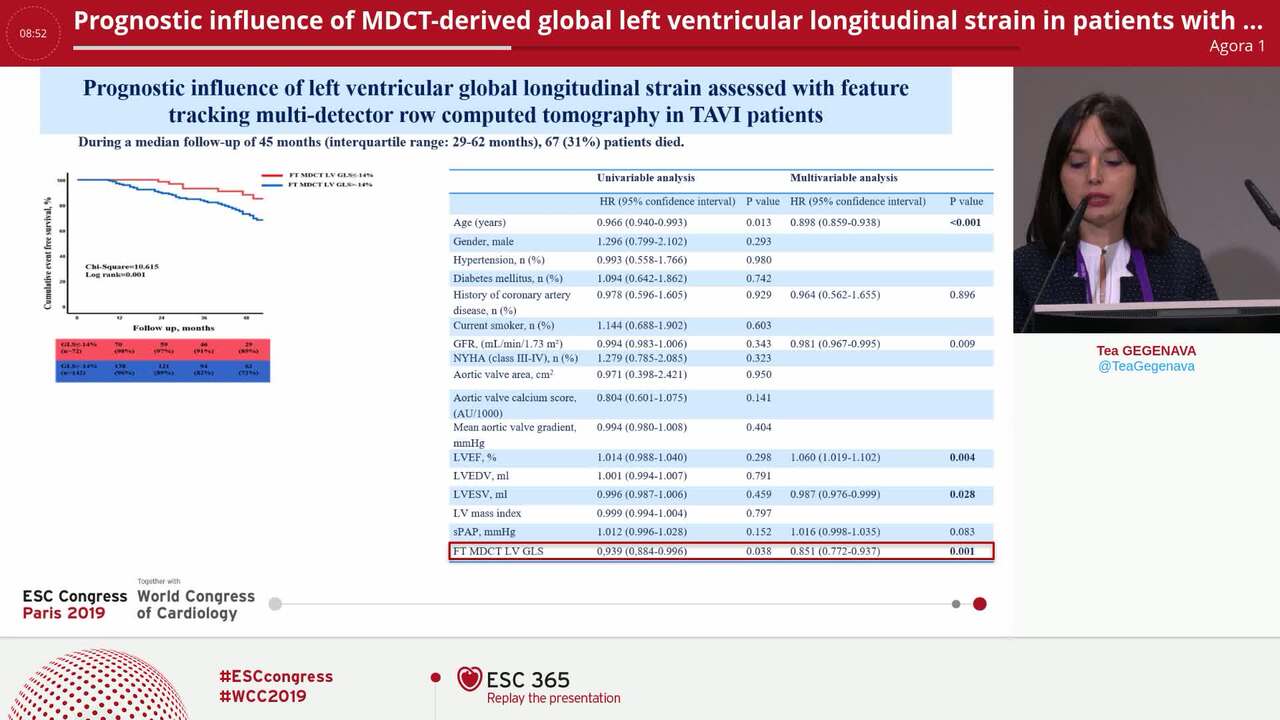
We analyzed 180 patients (mean age 80.2 years, SD 9.02), of whom 98 (54.4%) were women. At the time of data collection, 58 deaths (32.6%) had been recorded, 17 (29.3%) of which occurred during the first year after TAVI, and 22 (37%) in the second year; 3 died immediately post-procedure and 7 before 6 months. The average TAPSE in the baseline TTE was 21.7 mm +/- 4. FW-RVS could be analyzed in 150 patients (83%), with an average value of 20.5 +/- 6 in the pre-TAVI study. Neither TAPSE nor FW-RVS showed statistical significance in 1-year mortality (p>0.5; p=0.19, respectively). However, RV strain demonstrated an impact on 2-year follow-up mortality (OR 1.14; p=0.014), while TAPSE did not reach significance (p=0.59).
In our study, in an elderly population of patients with severe AS treated with TAVI, free wall RV strain, a sensitive marker of subclinical myocardial dysfunction, proved to be a predictive parameter of long-term mortality, once the first year of follow-up was overcome. The poor influence of RV function within the first year of follow-up may be related to aspects of futility and other conditions of interest during this specific follow-up period (coronavirus pandemic).
Contributors


I Santiago Setien
Author
G Veiga Fernandez
Author
J M Cuesta Cosgaya
Author
P Lerena Saenz
Author
C Coroas Pascual
Author
D Serrano Lozano
Author
M Llano Cardenal
Author
J M Zarauza Navarro
Author
F Sainz Laso
Author
D H Lee Hwang
Author
T Garcia Camarero
Author
A Gil Ongay
Author
J M De La Torre Hernandez
Author
You may be interested in