Complications of transvenous lead extraction—focus on tricuspid valve damage: a case report
European Heart Journal - Case Reports


Abstract
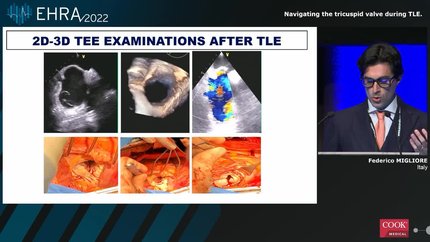
Transvenous lead extraction (TLE) has become an essential component of lead management strategies, but it carries the risk of severe complications, including damage to the tricuspid valve. Currently, there are no established predictors that can help prevent these complications.
An 84-year-old male with a dual-chamber pacemaker was admitted to the hospital due to a pocket fistula resulting from a local infection. Approximately 1 year prior, he underwent the implantation of a new ventricular lead and pacemaker replacement due to lead damage and battery depletion. Another lead had been abandoned. The patient underwent a procedure to remove the entire pacing system, which was complicated by tricuspid leaflet avulsion, resulting in acute and severe tricuspid regurgitation. A biological valve was successfully implanted to replace the damaged valve. Twenty days later, a new pacing system was implanted, which included one atrial lead and another positioned in the posterolateral coronary vein of the left ventricle. Post-procedural transthoracic echocardiography (TTE) showed the biological valve in place at the tricuspid orifice, with no regurgitation and preserved ejection fraction. Following recovery, the patient was discharged in good condition.
While pre-procedural TTE and intra-procedural transesophageal echocardiography are commonly used to identify lead-induced tricuspid insufficiency, they often do not clarify the underlying mechanisms or predict potential complications during TLE. To address this issue safely, further research into new imaging techniques is necessary, as some existing methods may not be adequate in certain situations.
Contributors

Maciej Sterliński
Author
Artur Oręziak
Author
Radosław Pracoń
Author
Piotr Kołsut
Author
Felix Wiedmann
Author
Neil Bodagh
Author
Mark Elliott
Author
Franca Morselli
Author
You may be interested in