Heart failure of very rare aetiology—haemochromatosis Type 3: a case report
European Heart Journal - Case Reports


Abstract
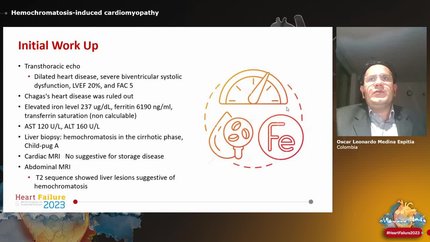
Haemochromatosis is a pathological condition characterized by the accumulation of iron in parenchymal organs, leading to toxic damage and dysfunction. Cardiac haemochromatosis represents one of the rare causes of severe heart failure (HF) that can be potentially prevented with targeted treatment.
We present the case of a 41-year-old female who was hospitalized for decompensated HF. Echocardiography revealed severe systolic dysfunction with a phenotype of dilated cardiomyopathy, accompanied by secondary moderate mitral regurgitation and severe tricuspid regurgitation (TR). To differentiate potential causes of HF, coronary angiography, cardiac magnetic resonance imaging (MRI), and endomyocardial biopsy were performed. Based on clinical findings, laboratory results, cardiac MRI, and endomyocardial biopsy data, a diagnosis of haemochromatosis was confirmed, and mutations in the
Investigating the aetiology of HF is essential, as even rare causes can be identified, and specific treatments are available that significantly improve prognosis and survival.
Contributors

Aistė Montvilaitė-Laurinavičienė
Author
Vilnius University Hospital Santaros Clinics Vilnius , Lithuania

Rūta Dirsienė
Author
Audra Banišauskaitė
Author
Marius Šukys
Author
Gintarė Šakalytė
Author
Eglė Ereminienė
Author
Giulia Ferrannini
Author
Carlos Minguito Carazo
Author
Matteo Nicoletto
Author
Dimitrios Karelas
Author
You may be interested in