Percutaneous coil embolization of a post-traumatic left anterior descending coronary artery pseudoaneurysm: a case report
European Heart Journal - Case Reports


Abstract
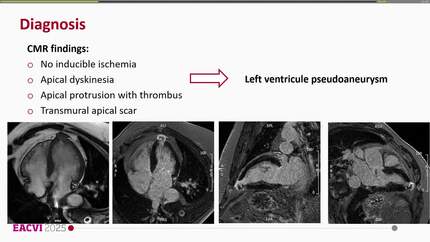
Coronary artery pseudoaneurysm (PSA) is a rare occurrence linked to percutaneous coronary interventions (PCIs), infection, or chest trauma, lacking established management guidelines due to its low incidence.
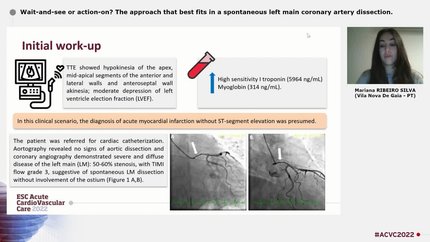
A 78-year-old male with a medical history of triple vessel disease, post coronary artery bypass grafting, heart failure, and chronic obstructive pulmonary disease, presented with intractable left-sided chest pain following a mechanical fall. The initial workup was positive for mildly elevated high-sensitivity troponin and brain natriuretic peptide raising suspicion for a pulmonary embolism; but chest computed tomography angiography revealed an enlarging pericardial haematoma. Further computed tomographic coronary angiography exposed a mid-left anterior descending (LAD) interrupted segment concerning for a contained ruptured PSA. Left heart catheterization confirmed the suspicion, showing a collection of contrast at the haematoma site following injection of contrast into the saphenous vein graft to the diagonal artery. The patient underwent percutaneous PSA coiling, successfully occluding blood inflows from both the first diagonal and distal LAD. There were no subsequent electrocardiogram changes or further elevation in troponin levels ensuring the integrity of the LAD vital branches.
Coronary PSA results from the dissection of at least one layer of the vessel wall leading to blood extravasation. Although they are usually associated with PCI complications, the absence of haemopericardium in prior imaging makes the recent blunt chest trauma the most likely cause of this patient’s presentation. Percutaneous coiling of inflow vessels to PSAs proved to be a suitable option in this case of a patient with a history of sternotomy and an expanding pericardial haematoma.
Contributors

Joaquin Espinoza
Author
Marina Byer
Author
Moises Vasquez
Author
Dileep R Yavagal
Author
Yiannis S Chatzizisis
Author
University of Miami Leonard M. Miller School of Medicine Miami , United States of America
Milenko Zoran Cankovic
Author
Joon Heng Tan
Author
Josip Andelo Borovac
Author
Pok-Tin Tang
Author
You may be interested in