Empagliflozin: unlocking new potentials in heart failure decongestion
European Heart Journal


Abstract
Managing acute heart failure (AHF) remains a formidable challenge in cardiology, primarily due to the limitations of conventional decongestive therapies. This study explores the efficacy of Empagliflozin, a sodium-glucose cotransporter 2 (SGLT2) inhibitor, in decongestion management for AHF.
Conducted in a tertiary care setting, this prospective cohort study involved 450 patients, divided equally into an Empagliflozin group and a control group receiving standard care. The study assessed changes in body weight, clinical congestion scores, hematocrit levels, and NT-proBNP levels as primary outcomes over a period of 90 days. Safety and adverse events related to Empagliflozin were also monitored.
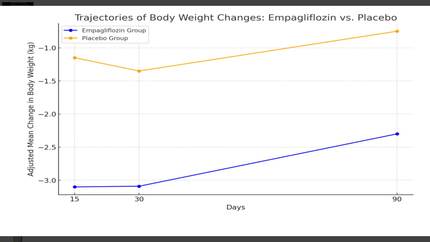
Empagliflozin led to a significant reduction in body weight (mean difference at Day 15: −1.95 kg, P<0.0001), and clinical congestion scores (mean difference at Day 15: −0.35, P=0.0050). Hematocrit levels increased significantly (mean increase at Day 15: 1.65%, P<0.0001), and NT-proBNP levels showed a more substantial decrease in the Empagliflozin group compared to the placebo. Safety profiles were consistent with previous studies, showing no significant increase in adverse events.
Empagliflozin demonstrates a substantial improvement in decongestion management in AHF patients, offering a promising alternative to traditional therapies. The findings indicate potential broader applications in heart failure management and support the need for updated clinical guidelines incorporating Empagliflozin as a therapeutic option in AHF.
Contributors


You may be interested in