Late mitral leaflet tear after transcatheter edge-to-edge repair for acute ischaemic mitral regurgitation: a case report
European Heart Journal - Case Reports


Abstract
Acute mitral regurgitation due to papillary muscle rupture is a severe complication of acute myocardial infarction. Transcatheter edge-to-edge repair is emerging as an effective alternative to surgical treatment, with encouraging outcomes. Leaflet adverse events are rare and are associated with relapse of significant mitral regurgitation.
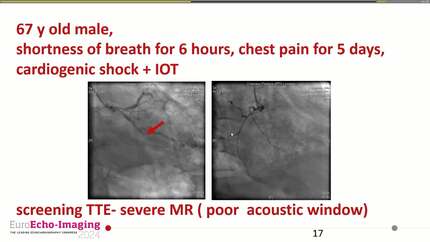
A 54-year-old man arrived at our hospital with a late presentation of ST-elevation myocardial infarction. During primary percutaneous coronary intervention of the circumflex coronary artery, a partial papillary muscle rupture occurred with acute severe mitral regurgitation and cardiogenic shock. Due to the severe haemodynamic instability, the patient underwent an emergent transcatheter edge-to-edge repair with MitraClip device during Impella support with mitral regurgitation resolution and haemodynamic stabilization. At 2-month follow-up, an interclip leaflet tear occurred with relapse of severe mitral regurgitation, requiring a mitral valve replacement surgery.
Acute mitral regurgitation due to papillary muscle rupture is a serious complication of acute myocardial infarction. Management is based on haemodynamic stabilization and surgery. The transcatheter edge-to-edge repair is emerging as a therapeutic alternative in high-risk cases. Leaflet adverse events rarely occur during the transcatheter edge-to-edge repair procedure or before patient discharge. Our case is the first to report a late leaflet adverse event, occurring two months after the procedure and, interestingly, after an acute myocardial infarction conditioning an ischaemic mitral regurgitation. This event may be the result of the progressive adverse remodelling of left ventricular inferolateral akinetic wall, with consequent increase of tethering forces on the posterior leaflet, tensioned in the opposite direction by the clip.
Contributors


Gloria Tamborini
Author
Marco Zanobini
Author
Ivana Marana
Author
Manuela Muratori
Author
Federico De Marco
Author

Mauro Pepi
Author
Christoph Sinning
Author
Masahiko Asami
Author
Andrew Harris
Author
Aiste Monika Jakstaite
Author
Nikesh Jathanna
Author
You may be interested in