Increasing the reach: optimizing screening for atrial fibrillation—the STROKESTOP III study
EP Europace Journal


Abstract
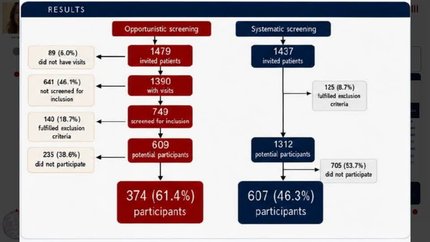
Atrial fibrillation (AF) is the most common type of cardiac arrythmia and is an important risk factor for ischaemic stroke. Many cases of AF remain undiagnosed due to its paroxysmal, intermittent, and often asymptomatic nature. Early detection of AF through screening and initiation of treatment with oral anticoagulants can prevent stroke, increase life expectancy, and decrease the cost of healthcare for the society. However, participation has been low in previous AF screening studies employing population screening. The aim of this study is to determine whether opportunistic screening is a superior method to increase participation in comparison to population screening. We hypothesize that opportunistic screening will significantly increase participation.
In our study, STROKESTOP III, a randomized prospective cohort study, we compare two different methods of AF screening in high-risk individuals: population screening vs. opportunistic screening. Sixteen different primary clinics in Värmland, Sweden, serving 75–76-year-old individuals (
The STROKESTOP III study will provide valuable information on which screening method to use for improved participation in atrial fibrillation screening.
Contributors

Michael Ingre
Author
Fredrik Carlstedt
Author
Anders Eriksson
Author

Johanna Star Tenn
Author
Mårten Rosenqvist
Author
Emma Svennberg
Author
You may be interested in