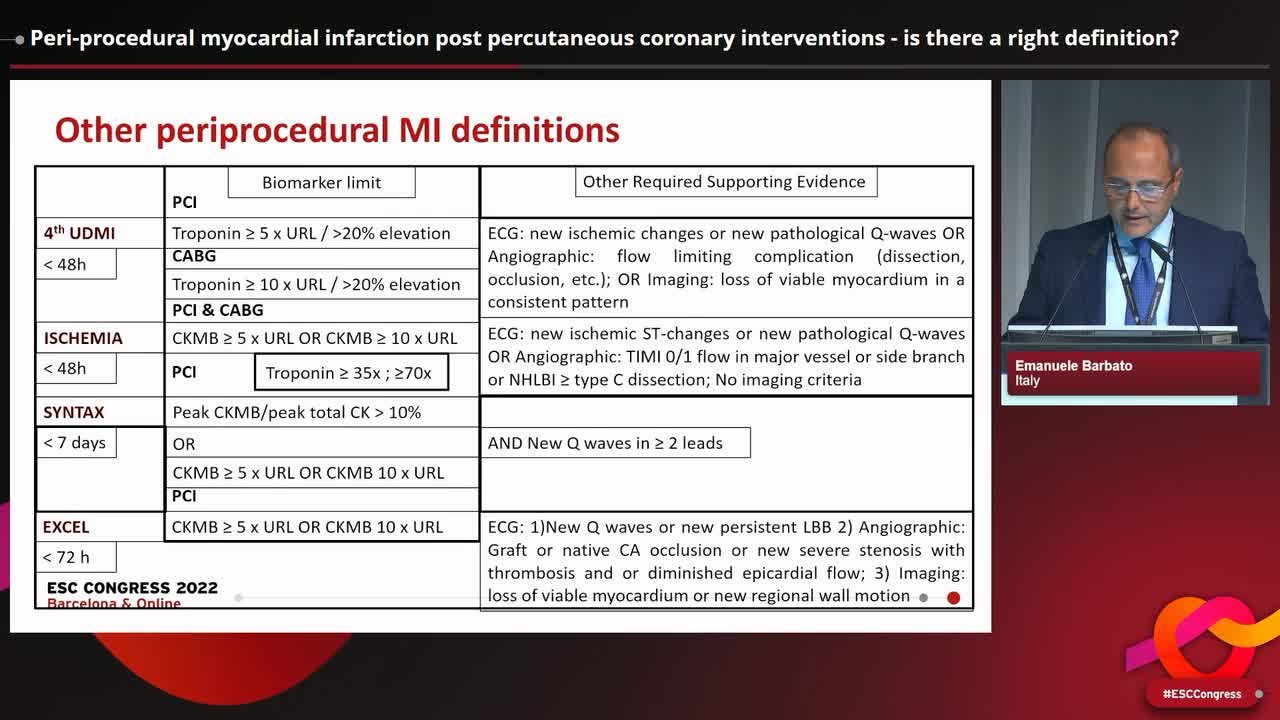
Periprocedural myocardial infarction after percutaneous coronary intervention and long-term mortality: a meta-analysis
European Heart Journal


Abstract
Conflicting data are available regarding the association between periprocedural myocardial infarction (PMI) and mortality following percutaneous coronary intervention. The purpose of this study was to evaluate the incidence and prognostic implication of PMI according to the Universal Definition of Myocardial Infarction (UDMI), the Academic Research Consortium (ARC)-2 definition, and the Society for Cardiovascular Angiography and Interventions (SCAI) definition.
Studies reporting adjusted effect estimates were systematically searched. The primary outcome was all-cause death, while cardiac death was included as a secondary outcome. Studies defining PMI according to biomarker elevation without further evidence of myocardial ischaemia (‘ancillary criteria’) were included and reported as ‘definition-like’. Data were pooled in a random-effect model.
A total of 19 studies and 109 568 patients were included. The incidence of PMI was progressively lower across the UDMI, ARC-2, and SCAI definitions. All PMI definitions were independently associated with all-cause mortality [UDMI: hazard ratio (HR) 1.61, 95% confidence interval (CI) 1.32–1.97;
All currently available international definitions of PMI are associated with an increased risk of all-cause death after percutaneous coronary intervention. The magnitude of this latter association varies according to the sensitivity and prognostic relevance of each definition.
Contributors

Luca Paolucci
Author
Sara Sergio
Author
Annunziata Nusca
Author
Carlo Briguori
Author
Emanuele Barbato
Author
Gian Paolo Ussia
Author
Francesco Grigioni
Author
You may be interested in