Successful transcatheter edge-to-edge repair for atrial functional mitral regurgitation after surgical annuloplasty ring dehiscence: a case report
European Heart Journal - Case Reports


Abstract
Annuloplasty ring dehiscence (ARD) after surgical mitral valve repair is a rare complication, which causes recurrent mitral regurgitation (MR) and is associated with adverse outcomes in patients with a prohibitive risk of repeat surgery. However, a patient developed severe MR, when challenging transcatheter edge-to-edge repair (TEER) after surgical ring dehiscence, it should be considering the relative efficacy and safety.
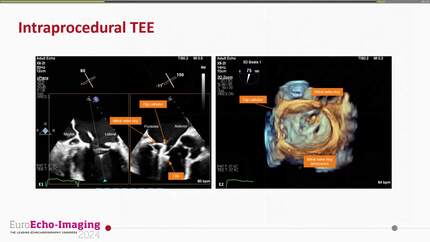
An 89-year-old man underwent mitral valve repair with an annuloplasty ring for moderate atrial functional MR (AFMR). Post-operative transthoracic echocardiography on Day 7 suggested a dislodged mitral annuloplasty ring and recurrent moderate AFMR. However, the MR developed severely, which led to two hospitalizations for congestive heart failure in the past year. Transoesophageal echocardiography (TOE) was performed carefully to ensure that the TEER clip did not interfere with the dislodged annuloplasty ring. Consequently, only the therapeutic target on the medial side of the A2–P2 region was approached posteriorly behind the peri-ring space, without gripper interference.
Transcatheter edge-to-edge repair using the G4-MitraClip® system is feasible and safe in patients with recurrent severe AFMR after surgical mitral valve repair concomitant with ARD. Meticulous simulation with pre-operative TOE is one of the crucial steps for successful outcomes.
Contributors

Ryota Kosaki
Author
Eiji Toyosaki
Author
Hiroto Fukuoka
Author
Toshiro Shinke
Author
Giuilia Elena Mandoli
Author
Christoph Hammerstingl
Author
Hugo Rodríguez-Zanella
Author
Elton Luo
Author
You may be interested in