An acute coronary syndrome in an unusual patient: analysing cisplatin toxicity—a case report and review of the literature
European Heart Journal - Case Reports


Abstract
Germ cell tumours (GCT) are the most common malignancy affecting young adult men. The introduction of cisplatin-based chemotherapy in recent decades has significantly changed the prognosis of these malignant tumours into highly curable cancer, even in the setting of advanced disease. However, in the last decade, the success of these chemotherapy regimens in curing GCTs has been slowed by a growing recognition of their important late toxicities, such as cardiovascular disease.
We present the case of a 23-year-old male, recently diagnosed with a mixed non-seminomatous testicular germinal tumour, on stage IIIA (pT3 cN2 cM1a), with retroperitoneal adenopathies and pulmonary metastases. After performing a right inguinal orchiectomy, he started chemotherapy treatment with cisplatin + etoposide. Shortly after starting treatment, the patient presented an ST-elevation acute coronary syndrome. The cardiac catheterization revealed a non-occlusive thrombus in the middle segment of the right coronary artery. Intracoronary imaging techniques were used to study the arterial wall, which revealed the presence of atherosclerotic plaque that could have ruptured, with the consequent response of platelet aggregation and thrombus formation. Barely 7 months after this event, the patient was again admitted to hospital for pulmonary thromboembolism with pulmonary infarction.
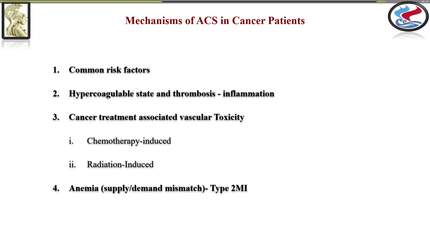
To date, there are two hypotheses linking the association between cisplatin-based chemotherapy and cardiovascular disease. The direct hypothesis argues for the presence of direct chemotherapy-induced vascular damage. The indirect hypothesis, on the other hand, is based on the induction and development of cardiovascular risk factors by chemotherapy. This cardiovascular toxicity of chemotherapy is aggravated by a cancer-induced proinflammatory and prothrombotic state.
Contributors

Josu Erquicia Peralt
Author
Luis Fernandez Gonzalez
Author
Koldobika Garcia San Román
Author
Juan Carlos Astorga Burgo
Author
Aida Acín Labarta
Author
Grigoris Karamasis
Author
Antonios Karanasos
Author
Abdullah Abdullah
Author
You may be interested in