Long QT syndrome: importance of reassessing arrhythmic risk after treatment initiation
European Heart Journal


Abstract
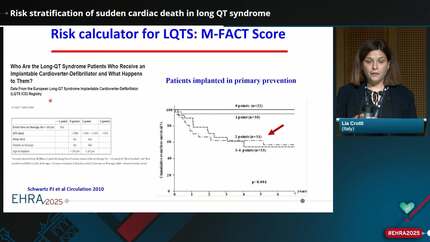
Risk scores are proposed for genetic arrhythmias. Having proposed in 2010 one such score (M-FACT) for the long QT syndrome (LQTS), this study aims to test whether adherence to its suggestions would be appropriate.
LQT1/2/3 and genotype-negative patients without aborted cardiac arrest (ACA) before diagnosis or cardiac events (CEs) below age 1 were included in the study, focusing on an M-FACT score ≥2 (intermediate/high risk), either at presentation (static) or during follow-up (dynamic), previously associated with 40% risk of implantable cardioverter defibrillator (ICD) shocks within 4 years.
Overall, 946 patients (26 ± 19 years at diagnosis, 51% female) were included. Beta-blocker (βB) therapy in 94% of them reduced the rate of those with a QTc ≥500 ms from 18% to 12% (
Beta-blockers often shorten QTc, thus changing risk scores and ICD indications for primary prevention. Yearly risk reassessment with therapy optimization leads to fewer ICD implants (3%) without increasing life-threatening events.
Contributors

Veronica Dusi
Author
Federica Dagradi
Author
Carla Spazzolini
Author
Lia Crotti
Author

Fulvio L F Giovenzana
Author
Giulia Musu
Author
Matteo Pedrazzini
Author
Margherita Torchio
Author

You may be interested in