Case report of increased left ventricular end-diastolic pressure with pulsatile left ventricular assist device
European Heart Journal - Case Reports


Abstract
Left ventricular assist devices (LVADs) are increasingly utilized in cardiogenic shock and high-risk percutaneous coronary interventions (PCIs). These devices aspirate and expel blood from the left ventricle (LV) into the aorta, consequently reducing left ventricular end-diastolic pressure (LVEDP). We report a case of unexpected LVEDP rise under LV-to-aorta LVAD in the context of transcatheter aortic valve implantation (TAVI) and concomitant multi-vessel PCI.
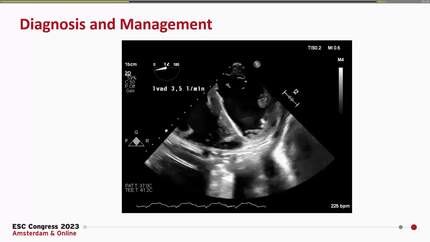
A patient with acute heart failure, severely depressed systolic LV function, severe aortic stenosis, and multi-vessel coronary artery disease underwent TAVI and concomitant PCI under pulsatile LVAD. Notably, the patient experienced unexpected shortness of breath and elevated LVEDP while under LVAD, which normalized immediately upon LVAD removal.
Pulsatile LVAD enhances cardiac output by providing pulsatile support through a percutaneous bi-directional flow catheter. Despite expectations of reduced LVEDP and improved myocardial oxygen supply under LVAD support, we observed high LVEDP and clinical complaints of shortness of breath following TAVI and multi-vessel PCI. This case illustrates that an LVAD across the aortic valve may immobilize aortic leaflets and generate acute aortic regurgitation.
Contributors


Julio Echarte
Author
Duygu Kocyigit
Author
A Shaheer Ahmed
Author
Nicolo Sisti
Author
Sarah Verhemel
Author
Rutger-Jan Nuis
Author
You may be interested in