High sensitivity of aortic valve calcium score in predicting high gradients in patients with severe aortic stenosis
European Heart Journal - Cardiovascular Imaging


Abstract
During the last decade, the use of aortic valve calcium (AVC) score as measured by multidetector computed tomography (MDCT) has gained ground as a reliable, supplemental method of detecting patients with severe aortic stenosis (AS). While its validity has been tested using indirect echocardiographic measures of AS, the relationship between AVC score and peak to peak gradient during left heart catheterization is less well studied.
We aimed to evaluate the relationship between AVC score and peak to peak gradient, the sensitivity and specificity of the method using strictly hemodynamic criteria for the severity of AS and to determine the factors associated with poor testing efficacy in diagnosing AS with AVC scoring.
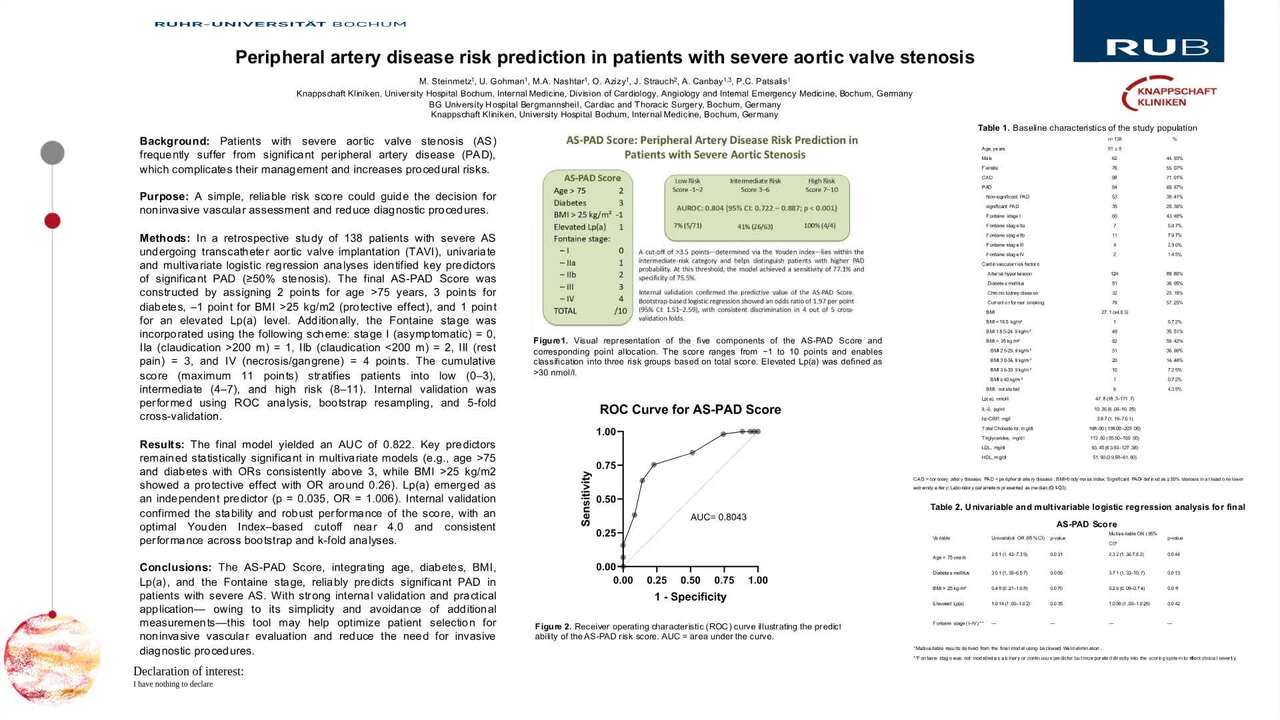
We retrospectively reviewed the medical records of 126 patients with tricuspid, degenerative, native valve severe AS planned for transcatheter aortic valve implantation (TAVI) in our hospital. All patients included had MDCT and Doppler echocardiography performed prior the operation while peak to peak gradient was measured during TAVI.
Mean AVC was higher in men than women (p=0.02) and in patients with increased interventricular septum thickness at end diastole (p=0.01). AVC score was positively correlated with measured peak to peak gradient (r=+0.43, p=0.001). In our study, measured sensitivity was 89,5% and specificity 27%. Patients were classified into two groups based on whether AVC scoring predicted accurately the severity of AS. Group A (N=106) consisted of patients with concordant severity of AS by AVC and peak to peak gradient while Group B (N=20) had patients with disconcordant severity of AS. We found that there was a statistically significant difference between the two groups regarding the presence of left ventricular hypertrophy (p=0.01).
AVC score is strongly correlated with hemodynamic peak to peak gradient in patients with severe AS undergoing TAVI, showing high sensitivity but moderate specificity.
Contributors


N Ktenopoulos
Author
M Drakopoulou
Author
A Synetos
Author
S Tsalamandris
Author
K Aznaouridis
Author
C Tsioufis
Author
K Toutouzas
Author
You may be interested in