Low-intensity pulsed ultrasound for ‘no-option’ chronic/critical limb-threatening ischaemia in a patient with Buerger disease: a case report
European Heart Journal - Case Reports


Abstract
Buerger disease, also known as Winiwarter–Buerger disease or thromboangiitis obliterans (TAO), is a non-specific inflammation of small- and medium-sized arteries with thrombus obliteration and without atherosclerotic changes. Patients with TAO can develop chronic limb-threatening ischaemia (CLTI) and are at risk of limb amputation despite smoking cessation and exercise therapy recommendations.
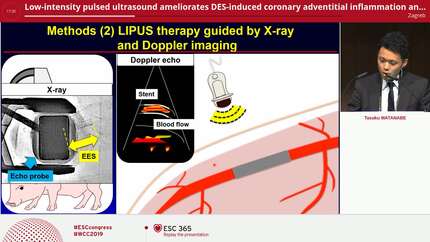
A 72-year-old Japanese man presented with painful discolouration of toes and renal impairment. He was diagnosed with Rutherford classification Stage 6 CLTI with immunoglobulin A nephropathy. He refused limb amputation. Clinical symptoms reduced after treatment with low-intensity pulsed ultrasound (LIPUS). LIPUS is a non-invasive option to alleviate peripheral arterial disease symptoms. Despite the initiation of conventional therapy measures, there was a worsening of the limb condition. The non-invasive investigational treatment option of LIPUS was initiated after the poor clinical outcomes of the conventional therapy measures. The patient’s symptoms in the bilateral lower limbs, ulcers, and the blue-coloured toes gradually lessened. After 1 year of treatment with LIPUS, he had achieved better walking independence with improved quality of life.
Low-intensity pulsed ultrasound is a non-invasive option for therapeutic angiogenesis with the potential to improve ischaemic limb conditions in patients with peripheral arterial disease and to avoid major amputation procedures.
Contributors

Farina Mohamad Yusoff
Author
Masato Kajikawa
Author
Takumi Sakamoto
Author
Akio Tanaka
Author
Dimitrios A Vrachatis
Author
Daniel Messiha
Author
Niklas Schenker
Author
You may be interested in