Electrophysiological characteristics of tachyarrhythmia and effects of catheter ablation in patients with Fontan circulation
EP Europace Journal


Abstract
Incidence of arrhythmia in complex congenital heart disease is higher than general population. Characteristics of arrhythmia in patients with functional single ventricle is not known.
Total 18 patients (age, 22.1 8.5 years, 9 men) with Fontan circulation who had undergone catheter ablation for tachyarrhythmia were retrospectively consecutively included. Characteristics of congenital heart disease, mechanisms of tachyarrhythmia, and efficacy and safety of catheter ablation were analyzed.
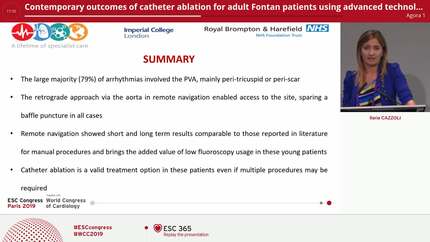
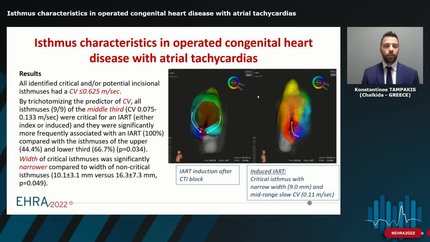
Congenital heart diseases of the patients were as follows: double outlet right ventricle, 9; common atrioventricular septal defect, 5; and pulmonary atresia, 4. Fontan types were as follows: lateral tunnel Fontan, 9; extracardiac conduit Fontan 9. Fontan conduit puncture was successful in all patients. Mechanisms of tachyarrhythmia were as follows: intraatrial macroreentrant tachycardia, 8; focal atrial tachycardia, 4; atrioventricular nodal reentrant tachycardia, 3; twin atrioventricular nodal reciprocating tachycardia, 2; unknown, 2. Success rate of catheter ablation, recurrence rate, and complication rate were 16 of 18 patients, 2 of 18 patients, and 0 of 18 patients, respectively.
Intraatrial macroreentrant tachycardia is the most common tachycardia mechanism in patients with Fontan circulation. Catheter ablation for tachyarrhythmia is effective and safe in these population.
Contributors

You may be interested in