Optimized workflow for pulmonary vein isolation using very high power short duration radiofrequency ablation
EP Europace Journal


Abstract
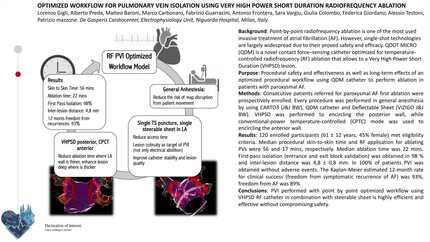
Point-by-point radiofrequency ablation is the most used invasive treatment of atrial fibrillation (AF). However, single-shot technologies are largely widespread due to their proved safety and efficacy. QDOT MICRO (QDM) is a novel contact force–sensing catheter optimized for temperature-controlled radiofrequency (RF) ablation that allows to maintain target temperature during 90 W ablations for ≤4 seconds.
This study evaluates procedural safety and effectiveness as well as long-term effects of an optimized procedural workflow using QDM catheter to perform wide atrial circumferential ablation in patients with paroxysmal AF.
Consecutive patients referred for paroxysmal AF first ablation through pulmonary vein isolation (PVI) were prospectively enrolled. Every procedure was performed in general anesthesia by using CARTO3 Electroanatomical Mapping System BiosenseWebster QDM catheter and Deflectable Sheet VIZIGO as single sheet in left atrium. VHPSD was performed to encircling the posterior wall, while conventional-power temperature-controlled (CPTC) mode was used to encircling the anterior wall. The primary safety endpoint was incidence of primary adverse events within ≤7 days of ablation. The primary effectiveness endpoint was freedom from documented atrial tachyarrhythmia recurrence and acute procedural, repeat ablation, and antiarrhythmic drug failure.
120 enrolled participants (61 ± 12 years, 45% female) met eligibility criteria. Median procedural skin-to-skin time and RF application for ablating PVs were 56 and 17 minutes, respectively. Median ablation time was 22 minutes. First-pass isolation (entrance and exit block validation) was obtained in 98 % and inter-lesion distance was 4,8 ± 0,8 mm. In 100% of patients PVI was obtained without adverse events. The Kaplan-Meier estimated 12-month rate for clinical success (freedom from symptomatic recurrence of AF) was 93%, freedom from AF was 89%
PVI performed with point by point optimized workflow using VHPSD RF catheter in combination with steerable sheet is highly efficient and effective without compromising safety.
Contributors

You may be interested in