Impaired baroreflex sensitivity, carotid stiffness, and exaggerated exercise blood pressure: a community-based analysis from the Paris Prospective Study III
European Heart Journal


Abstract
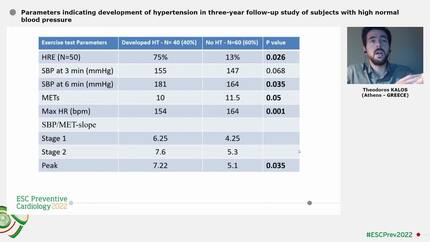
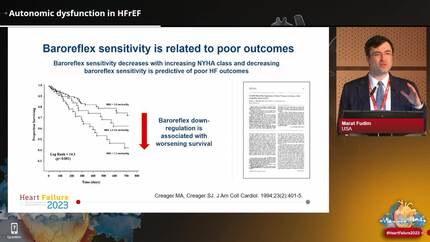
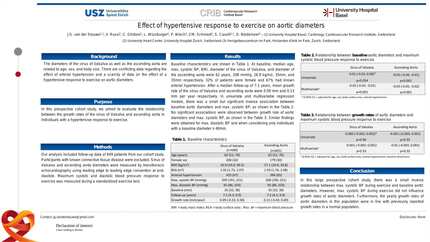
People with exaggerated exercise blood pressure (BP) have adverse cardiovascular outcomes. Mechanisms are unknown but could be explained through impaired neural baroreflex sensitivity (BRS) and/or large artery stiffness. This study aimed to determine the associations of carotid BRS and carotid stiffness with exaggerated exercise BP.
Blood pressure was recorded at rest and following an exercise step-test among 8976 adults aged 50 to 75 years from the Paris Prospective Study III. Resting carotid BRS (low frequency gain, from carotid distension rate, and heart rate) and stiffness were measured by high-precision echotracking. A systolic BP threshold of ≥ 150 mmHg defined exaggerated exercise BP and ≥140/90 mmHg defined resting hypertension (±antihypertensive treatment). Participants with exaggerated exercise BP had significantly lower BRS [median (Q1; Q3) 0.10 (0.06; 0.16) vs. 0.12 (0.08; 0.19) (ms2/mm) 2×10⁸;
Impaired BRS, but not carotid stiffness, is independently associated with exaggerated exercise BP even among those with well controlled resting BP. This indicates a potential pathway from depressed neural baroreflex function to abnormal exercise BP and clinical outcomes.
Contributors

Pierre Boutouyrie
Author
Marie-Cécile Perier
Author
Frédérique Thomas
Author
Catherine Guibout
Author
Hakim Khettab
Author
Bruno Pannier
Author
Stéphane Laurent
Author
Xavier Jouven
Author
Jean-Philippe Empana
Author
You may be interested in