Pre- and post-procedural cardiac imaging (computed tomography and magnetic resonance imaging) in electrophysiology: a clinical consensus statement of the European Heart Rhythm Association and European Association of Cardiovascular Imaging of the European Society of Cardiology
EP Europace Journal


Abstract
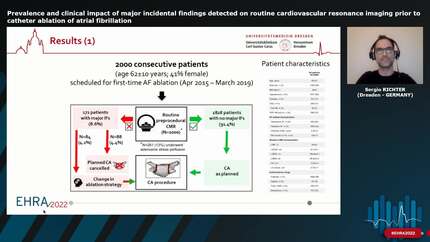
Imaging using cardiac computed tomography (CT) or magnetic resonance (MR) imaging has become an important option for anatomic and substrate delineation in complex atrial fibrillation (AF) and ventricular tachycardia (VT) ablation procedures. Computed tomography more common than MR has been used to detect procedure-associated complications such as oesophageal, cerebral, and vascular injury. This clinical consensus statement summarizes the current knowledge of CT and MR to facilitate electrophysiological procedures, the current value of real-time integration of imaging-derived anatomy, and substrate information during the procedure and the current role of CT and MR in diagnosing relevant procedure-related complications. Practical advice on potential advantages of one imaging modality over the other is discussed for patients with implanted cardiac rhythm devices as well as for planning, intraprocedural integration, and post-interventional management in AF and VT ablation patients. Establishing a team of electrophysiologists and cardiac imaging specialists working on specific details of imaging for complex ablation procedures is key. Cardiac magnetic resonance (CMR) can safely be performed in most patients with implanted active cardiac devices. Standard procedures for pre- and post-scanning management of the device and potential CMR-associated device malfunctions need to be in place. In VT patients, imaging—specifically MR—may help to determine scar location and mural distribution in patients with ischaemic and non-ischaemic cardiomyopathy beyond evaluating the underlying structural heart disease. Future directions in imaging may include the ability to register multiple imaging modalities and novel high-resolution modalities, but also refinements of imaging-guided ablation strategies are expected.
Contributors


Valentina Kutyifa
Author
Gerhard Hindricks
Author

Katja Zeppenfeld
Author
Corrado Carbuccichio
Author

Frank R Heinzel
Author

Marta De Riva
Author

Lukas Lehmkuhl
Author

Andrea Sarkozy
Author
Alessia Gimelli
Author
Claudio Tondo
Author
Sabine Ernst
Author
Matthias Antz
Author
Mark Westwood
Author
You may be interested in