The point on the treatment of arrhythmic storm
European Heart Journal Supplements


Abstract
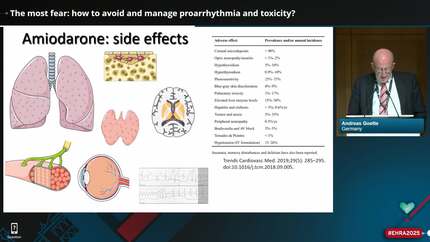
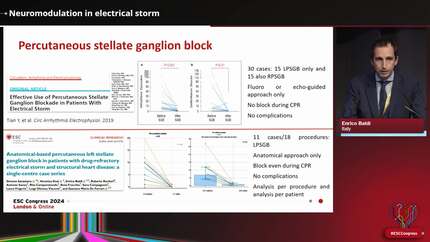
Arrhythmic storm is a clinical emergency associated with high mortality, which requires multi-disciplinary management. Reprogramming of the implantable cardiac defibrillator (ICD) aimed at reducing shocks, adrenergic blockade using beta-blockers, sedation/anxiolysis, and blockade of the stellate ganglion represent the first simple and effective manoeuvres, but further suppression of arrhythmias with antiarrhythmics is often required. A low-risk patient (e.g. monomorphic ventricular tachycardia, functioning ICD, and haemodynamically stable) should be managed with a beta-blocker (possibly non-selective) plus amiodarone, in addition to sedation with a benzodiazepine or dexmedetomidine; in patients at greater risk (high burden and haemodynamic instability), autonomic modulation with blockade of the stellate ganglion and the addition of a second antiarrhythmic (lidocaine) should be considered. In patients refractory to these measures, with advanced heart failure, general anaesthesia with intubation and the establishment of a haemodynamic circulatory support should be considered. Ablation, performed early, appears to be superior in terms of mortality and reduction of future shocks compared with titration of antiarrhythmics.
Contributors

Ludovico Lazzari
Author
Stefano Donzelli
Author
Alessandra Tordini
Author
Antonio Parise
Author
Ciro Pirozzi
Author
Federica Di Meo
Author
Carmine Marallo
Author
Vincenzo Pace
Author
Chiara Marini
Author
You may be interested in