Long-term simulated microgravity fosters carotid aging-like changes via Piezo1
Cardiovascular Research


Abstract
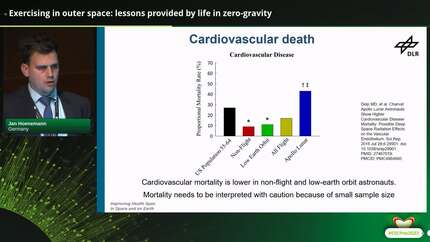
Elucidating the impacts of long-term spaceflight on cardiovascular health is urgently needed in face of the rapid development of human space exploration. Recent reports including the NASA Twins Study on vascular deconditioning and aging of astronauts in spaceflight are controversial. The aims of this study were to elucidate whether long-term microgravity promotes vascular aging and the underlying mechanisms.
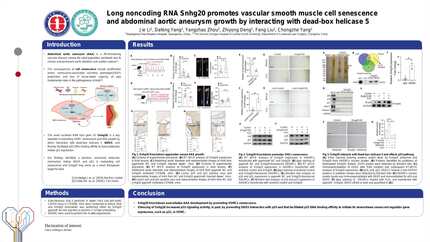
Hindlimb unloading (HU) by tail suspension was used to simulate microgravity in rats and mice. The dynamic changes of carotid stiffness in rats during 8 weeks of HU were determined. Simulated microgravity led to carotid artery aging-like changes as evidenced by increased stiffness, thickness, fibrosis, and elevated senescence biomarkers in the HU rats. Specific deletion of the mechanotransducer Piezo1 in vascular smooth muscles significantly blunted these aging-like changes in mice. Mechanistically, mechanical stretch-induced activation of Piezo1 elevated microRNA-582-5p in vascular smooth muscle cells, with resultant enhanced synthetic cell phenotype and increased collagen deposition via PTEN/PI3K/Akt signalling. Importantly, inhibition of miRNA-582-5p alleviated carotid fibrosis and stiffness not only in HU rats but also in aged rats.
Long-term simulated microgravity induces carotid aging-like changes via the mechanotransducer Piezo1-initiated and miRNA-mediated mechanism.
Contributors

Jiaxin Zhang
Author
Xinpei Wang
Author
Zihao Fu
Author
Changyang Xing
Author
Zhen Wang
Author
Hongyan Yang
Author
Jiahui Li
Author
Meijie Liu
Author
Ling Dong
Author
Xing Zhang
Author
Yongzhi Li
Author
Jiaping Wang
Author
Jiangang Long
Author
Jiankang Liu
Author
Shengpeng Wang
Author
Jia Li
Author
You may be interested in