Ecto-CD38-NADase inhibition modulates cardiac metabolism and protects mice against doxorubicin-induced cardiotoxicity
Cardiovascular Research


Abstract
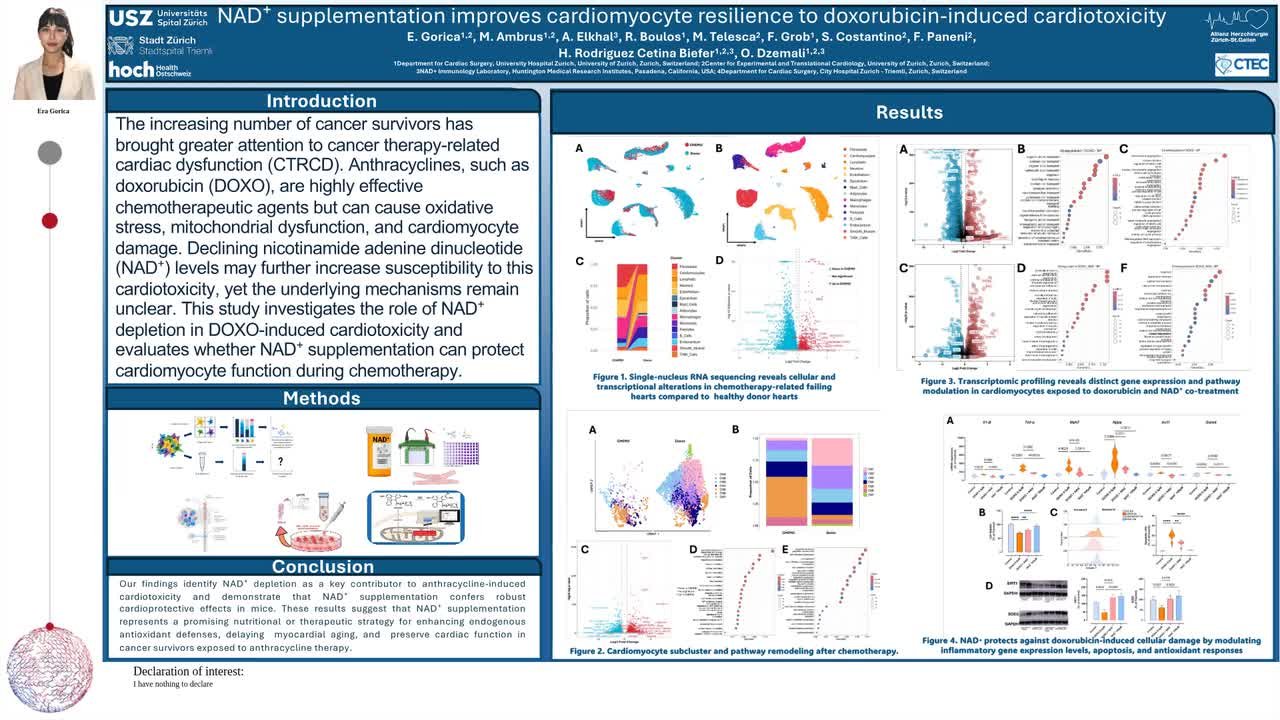
Doxorubicin (DXR) is a chemotherapeutic agent that causes dose-dependent cardiotoxicity. Recently, it has been proposed that the NADase CD38 may play a role in doxorubicin-induced cardiotoxicity (DIC). CD38 is the main NAD+-catabolizing enzyme in mammalian tissues. Interestingly, in the heart, CD38 is mostly expressed as an ecto-enzyme that can be targeted by specific inhibitory antibodies. The goal of the present study is to characterize the role of CD38 ecto-enzymatic activity in cardiac metabolism and the development of DIC.
Using both a transgenic animal model and a non-cytotoxic enzymatic anti-CD38 antibody, we investigated the role of CD38 and its ecto-NADase activity in DIC in pre-clinical models. First, we observed that DIC was prevented in the CD38 catalytically inactive (CD38-CI) transgenic mice. Both left ventricular systolic function and exercise capacity were decreased in wild-type but not in CD38-CI mice treated with DXR. Second, blocking CD38-NADase activity with the specific antibody 68 (Ab68) likewise protected mice against DIC and decreased DXR-related mortality by 50%. A reduction of DXR-induced mitochondrial dysfunction, energy deficiency, and inflammation gene expression were identified as the main mechanisms mediating the protective effects.
NAD+-preserving strategies by inactivation of CD38 via a genetic or a pharmacological-based approach improve cardiac energetics and reduce cardiac inflammation and dysfunction otherwise seen in an acute DXR cardiotoxicity model.
Contributors

Felipe Beckedorff
Author
Sanam Ebtehaj
Author
Joerg Herrmann
Author
Wim van Schooten
Author
Eduardo Nunes Chini
Author
Thais R Peclat
Author
Guillermo Agorrody
Author
Laura Colman
Author
Sonu Kashyap
Author
Julianna D Zeidler
Author
Claudia C S Chini
Author
Gina M Warner
Author
Katie L Thompson
Author
Pranjali Dalvi
Author
You may be interested in