Catheter ablation of ventricular tachycardia in patients with arrhythmogenic right ventricular cardiomyopathy and biventricular involvement
EP Europace Journal


Abstract
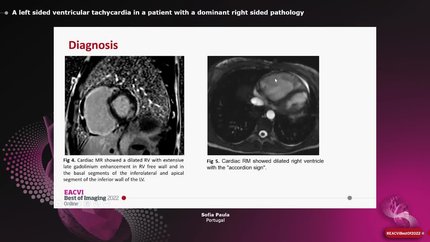
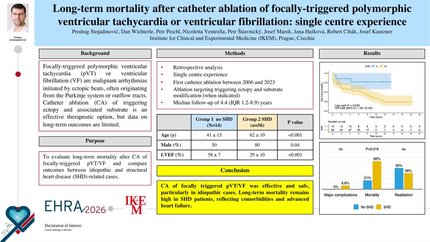
Catheter ablation of ventricular tachycardia (VT) improves VT-free survival in ‘classic’ arrhythmogenic right ventricular cardiomyopathy (ARVC). This study aims to investigate electrophysiological features and ablation outcomes in patients with ARVC and biventricular (BiV) involvement.
We assembled a retrospective cohort of definite ARVC cases with sustained VTs. Patients were divided into the BiV (BiV involvement) group and the right ventricular (RV) (isolated RV involvement) group based on the left ventricular systolic function detected by cardiac magnetic resonance. All patients underwent electrophysiological mapping and VT ablation. Acute complete success was non-inducibility of any sustained VT, and the primary endpoint was VT recurrence. Ninety-eight patients (36 ± 14 years; 87% male) were enrolled, including 50 in the BiV group and 48 in the RV group. Biventricular involvement was associated with faster clinical VTs, a higher VT inducibility, and more extensive arrhythmogenic substrates (all
Biventricular involvement implied a worse arrhythmic phenotype and increased the risk of left-sided VTs, while catheter ablation maintained its efficacy for VT control in this population. Younger age, lower RVEF, and non-acute complete success predicted VT recurrence after ablation.
Contributors

Lishui Shen
Author
Shangyu Liu
Author
Zhenhao Zhang
Author
Yulong Xiong
Author
Zihao Lai
Author
Feng Hu
Author
Lihui Zheng
Author
Yan Yao
Author
State Key Laboratory of Cardiovascular Disease, Fuwai Hospital, National Center for Cardiovascular D Beijing , China
You may be interested in