Atrial arrhythmias and acute pericarditis triggered by bleach ingestion-associated oesophageal perforation: a case report
European Heart Journal - Case Reports


Abstract
Acute pericarditis due to oesophageal perforation and caustic injury is a rare presentation of bleach ingestion. Cardiac arrhythmias such as atrial fibrillation and atrial flutter have been associated with certain aetiologies of acute pericarditis. This case report presents a unique occurrence of acute pericarditis following bleach ingestion and intermittent atrial fibrillation and atrial flutter triggered by liquid intake.
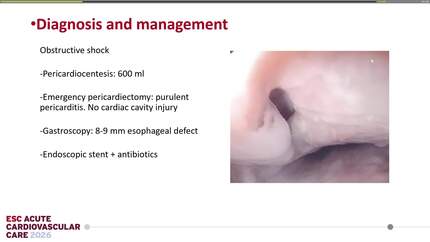
A 36-year-old male with no significant past medical history presented after attempted suicide by ingesting bleach. He had acute pericarditis resulting from caustic oesophageal perforation and extensive mediastinal injury. In the following days, he developed recurrent episodes of atrial fibrillation and atrial flutter following fluid intake, prompting treatment with metoprolol. On Day 5 of hospitalization, he underwent an oesophagogram and developed persistent atrial arrhythmia with haemodynamic instability requiring cardioversion. He underwent thoracoscopic surgery to address the oesophageal injury. A jejunostomy tube was placed and he had complete resolution of his recurrent atrial arrhythmia.
This case highlights a rare presentation of atrial arrhythmias and acute pericarditis caused by corrosive oesophageal injury due to bleach ingestion. The effective management of such cases necessitates a co-ordinated approach, involving the collaboration of cardiothoracic surgeons, cardiologists, and critical care specialists, with the aim of enhancing patient outcomes and mitigating the life-threatening risks associated with oesophageal perforation and cardiac arrhythmias. Furthermore, this case underscores the imperative for further research to better understand the relationship between traumatic acute pericarditis and atrial arrhythmias, offering the potential for improved patient care in these intricate clinical scenarios.
Contributors

Ammar Hasnie
Author
Stephen Clarkson
Author
Brittain Heindl
Author
Richard Ang
Author
Christoph Sinning
Author
Sebastian Feickert
Author
Alex D'amico
Author
Zhiyu Liu
Author
You may be interested in