Transcatheter aortic valve replacement outcomes in patients with low-flow very low-gradient aortic stenosis
European Heart Journal - Cardiovascular Imaging


Abstract
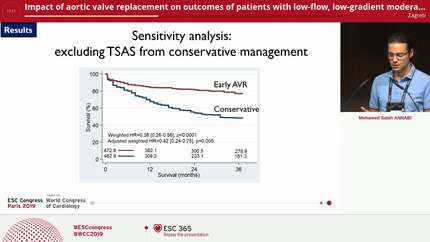
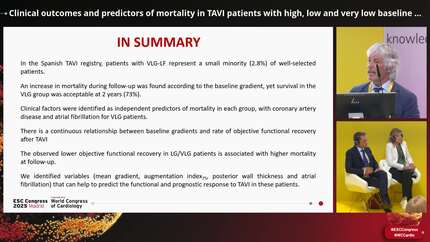
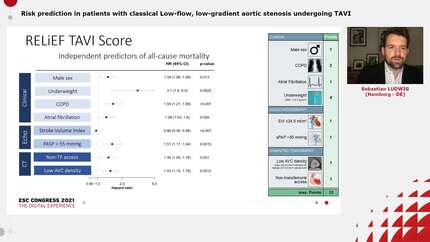
In patients with severe aortic stenosis (AS), low-flow low-gradient (LG) is a known predictor of worse outcomes. However, very LG may represent a distinct population with further cardiac dysfunction. It is unknown whether this population benefits from transcatheter aortic valve replacement (TAVR). We aimed to describe the patient characteristics and clinical outcomes of low-flow very LG severe AS.
This single-centre study included all patients with low-flow severe AS between 2019 and 2021. Patients were divided into groups with very LG [mean pressure gradient (MPG) ≤ 20 mmHg], LG (20 < MPG < 40 mmHg), and high-gradient (HG) (MPG ≥ 40 mmHg). Composite endpoint of all-cause mortality and heart failure rehospitalization was compared. A total of 662 patients [very LG 130 (20%); LG 339 (51%); HG 193 (29%)] were included. Median follow-up was 12 months. Very LG cohort had a higher prevalence of comorbid conditions with lower left ventricular ejection fraction (45% vs. 57% vs. 60%;
Low-flow very LG severe AS represents a distinct population with significant comorbidities and worse outcomes. Further studies are needed to evaluate the short- and long-term benefits of TAVR in this population.
Contributors

Hiroki A Ueyama
Author
Lakshay Chopra
Author
Ankur Dalsania
Author
Francesca Romana Prandi
Author
Samin K Sharma
Author
Annapoorna Kini
Author
You may be interested in