Minimally invasive coil embolization for significant left-to-right shunts due to giant coronary-to-pulmonary artery fistulas: a case report
European Heart Journal - Case Reports


Abstract
Coronary-to-pulmonary artery fistula (CPF) is a rare disease, and its optimal treatment strategy remains controversial. Herein, we report a rare case of minimally invasive coil embolization of giant CPFs.
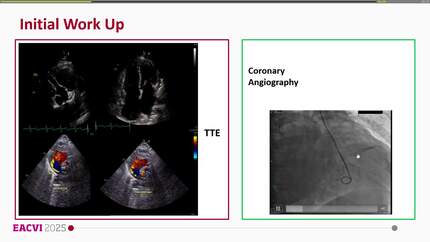
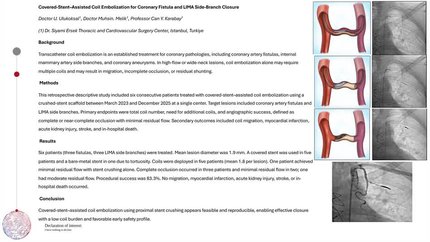
A 78-year-old man with a history of persistent atrial fibrillation and lumbar canal stenosis presented to our hospital with breathlessness. Cardiac computed tomography revealed giant CPFs inducing a significant left-to-right shunt (Qp/Qs 1/2.1) with a coronary artery aneurysm smaller than the size indicated for surgical treatment. To reduce the left-to-right shunt flow, coil embolization procedures for the fistulas were performed twice. Initially, the fistula arising from the right coronary artery was embolized using three Target® XXL (6 × 40 mm, 5 × 20 mm) and two Target® XL SOFT (4 × 12 mm) coils (Stryker Inc., Tokyo, Japan). One month later, the fistulas arising separately from the left coronary artery were embolized. After the procedures, the major shunt flow disappeared angiographically, and Qp/Qs significantly decreased to 1/1.2. Additionally, the fractional flow reserve of the left coronary artery increased from 0.79 to 0.93, and cardiopulmonary exercise testing showed an improvement in his exercise tolerance.
In similar cases, a surgical procedure with ligation of the CPFs combined with resection of a small aneurysm and coronary artery bypass grafting would normally have been considered the best approach. However, endovascular treatment targeting only the fistulas was a superior strategy considering the patient’s age. The coil embolization technique effectively controlled the shunt flow of the CPFs. This technique is considerably less invasive than surgical therapy.
Contributors

Hiroki Konishi
Author
Ryo Nishio
Author
Hiroshi Yamamoto
Author
Anastasia Egorova
Author
Raheel Ahmed
Author
Andriana Anagnostopoulou
Author
Sharipah Intan Syed Abas
Author
A Shaheer Ahmed
Author
Luis Antonio Moreno-Ruiz
Author
Emmanouil Mantzouranis
Author
You may be interested in