Coronary angiography-derived index of microcirculatory resistance and evolution of infarct pathology after ST-segment-elevation myocardial infarction
European Heart Journal - Cardiovascular Imaging


Abstract
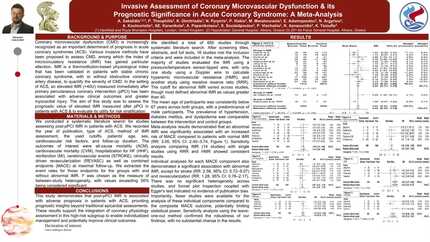
This study sought to evaluate the association of coronary angiography-derived index of microcirculatory resistance (angio-IMR) measured after primary percutaneous coronary intervention (PPCI) with the evolution of infarct pathology during 3-month follow-up after ST-segment-elevation myocardial infarction (STEMI).
Patients with STEMI undergoing PPCI were prospectively enrolled between October 2019 and August 2021. Angio-IMR was calculated using computational flow and pressure simulation immediately after PPCI. Cardiac magnetic resonance (CMR) imaging was performed at a median of 3.6 days and 3 months. A total of 286 STEMI patients (mean age 57.8 years, 84.3% men) with both angio-IMR and CMR at baseline were included. High angio-IMR (>40 U) occurred in 84 patients (29.4%) patients. Patients with angio-IMR >40 U had a higher prevalence and extent of MVO. An angio-IMR >40 U was a multivariable predictor of infarct size with a three-fold higher risk of final infarct size >25% (adjusted OR 3.00, 95% CI 1.23–7.32,
Angio-IMR immediately post-PPCI showed a significant association with the extent and evolution of infarct pathology. An angio-IMR >40 U indicated extensive microvascular damage with less regression of infarct size and more persistent iron at follow-up.
Contributors

Xiao Wang
Author
Qian Guo
Author
Ruifeng Guo
Author
Yingying Guo
Author
Yan Yan
Author
Wei Gong
Author
Wen Zheng
Author
Hui Wang
Author
Hui Ai
Author
Bin Que
Author
Lei Xu
Author
Yunlong Huo
Author

You may be interested in