A case series of patients with filamin-C truncating variants attending a specialized cardiac genetic clinic

European Heart Journal - Case Reports

17 November 2023
Organised by: Logo
ESC Journals

Abstract

AbstractBackground

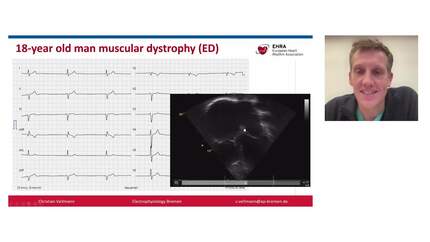
FLNC encodes for filamin-C, a protein expressed in Z-discs of cardiac and skeletal muscle, involved in intracellular signalling and mechanical stabilization. Variants can cause diverse phenotypes with skeletal (myofibrillar or distal myopathy) and/or cardiac (hypertrophic, restrictive, and arrhythmogenic cardiomyopathies) manifestations. Truncating variants have recently been implicated in arrhythmogenic cardiomyopathy (ACM) without skeletal disease.

Case summary

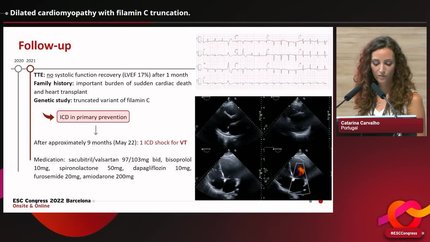
Retrospective review of medical records, including cardiac investigations, was performed for families attending a specialized clinic with a FLNC truncating variant (FLNCtv). Variants were classified according to accepted variant interpretation criteria. Of seven families identified, six had primary cardiac phenotypes with one nonsense and five frameshift variants (nonsense-mediated decay competent) identified. One family had no cardiac phenotype, with a pathogenic variant (p.Arg2467Alafs*62) identified as secondary genetic finding. Of the six with cardiac phenotypes, proband age at diagnosis ranged 27–35 years (four females). Five families experienced sudden cardiac death (SCD) of a young relative (age range: 30–43 years), and one patient listed for cardiac transplant. Left ventricular (LV) ejection fraction ranged from 13 to 46%, with LV fibrosis (late gadolinium enhancement) on cardiac imaging or on postmortem histology seen in three families. Two families had one genotype-positive/phenotype-negative relative.

Discussion

The FLNCtv causes a left-sided ACM phenotype with a high risk of severe cardiac outcomes including end-stage heart failure and SCD. Incomplete penetrance is observed with implications for reporting secondary genetic findings.

Contributors