Rapid Assessment and Treatment In Decompensated Aortic Stenosis (ASTRID-AS study)- A pilot study
European Heart Journal - Quality of Care and Clinical Outcomes


Abstract
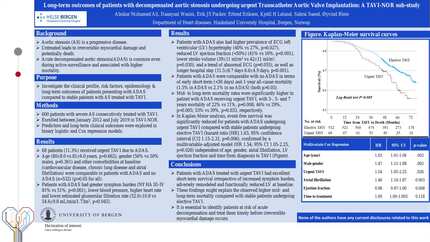
Acute decompensated aortic stenosis (ADAS) is common and associated with higher mortality, acute kidney injury (AKI) and longer hospital length of stay (LoS) compared with electively treated stable AS. The aim of this study was to assess the impact of a dedicated pathway that reduces time to transcatheter aortic valve implantation (TAVI) in ADAS, hypothesizing that LoS can be reduced without compromising patient safety.
Using a prospective, open label, cluster design, patients from 5 referring centres were allocated to the ASessment and TReatment In Decompensated Aortic Stenosis (ASTRID-AS) pathway where the diagnosis, referral, investigations and treatment of ADAS were prioritised and expedited. 15 hospitals remained on the conventional pathway that followed the same process, albeit according to a waiting list. The primary efficacy endpoint was hospital LoS and the secondary safety endpoint, a composite of death or AKI at 30 days post-TAVI. 58 conventional patients and 25 ASTRID-AS patients were included in this study. Time to TAVI in the conventional vs. ASTRID-AS cohort was 22 (15–30) vs. 10 (6–12) days;
A dedicated pathway for ADAS that shortens time to TAVI demonstrated reduced hospital LoS without compromising patient safety and a trend towards improving clinical outcomes.
Contributors

Kush P Patel
Author
Sumanto Mukhopadhyay
Author
Kerry Bedford
Author
Rhian Richards
Author
Helen Queenan
Author
Melanie Jerrum
Author
Judy Banton
Author
Mick Ozkor
Author
Anthony Mathur
Author
Simon Kennon
Author
Andreas Baumbach
Author
You may be interested in