PCI or CABG for left main coronary artery disease: the SWEDEHEART registry

European Heart Journal

8 June 2023
Organised by: Logo
ESC Journals Cardiovascular Surgery Interventional Cardiology

Abstract

AbstractAims

An observational nationwide all-comers prospective register study to analyse outcomes after coronary artery bypass grafting (CABG) or percutaneous coronary intervention (PCI) in unprotected left main coronary artery (LMCA) disease.

Methods and results

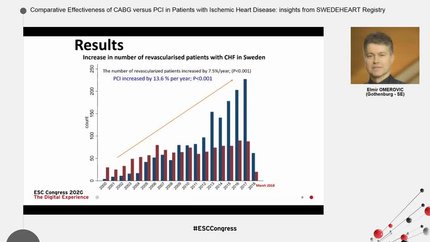
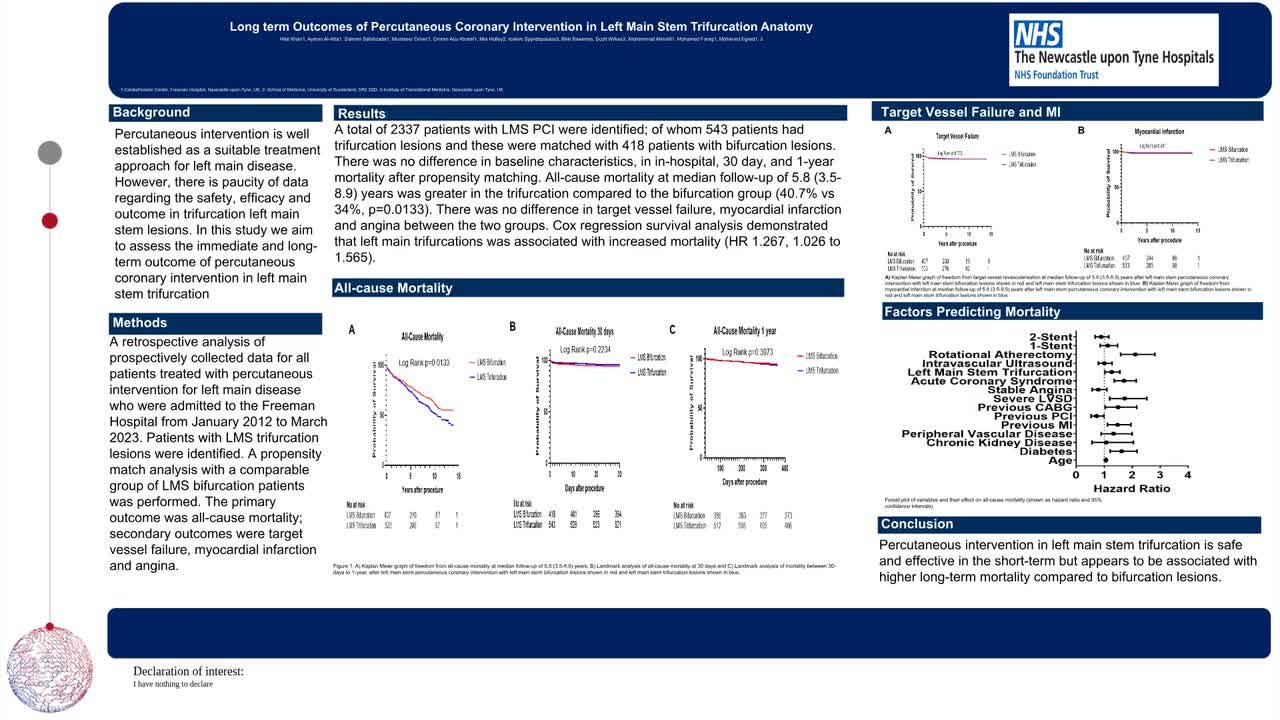
All patients undergoing coronary angiography in Sweden are registered in the Swedish Web-system for Enhancement and Development of Evidence-based care in Heart disease Evaluated According to Recommended Therapies registry. Between 01/01/2005 and 12/31/2015, 11 137 patients with LMCA disease underwent CABG (n = 9364) or PCI (n = 1773). Patients with previous CABG, ST-elevation myocardial infarction (MI) or cardiac shock were excluded. Death, MI, stroke, and new revascularization during follow-up until 12/31/2015 were identified using national registries. Cox regression with inverse probability weighting (IPW) and an instrumental variable (IV), administrative region, were used. Patients undergoing PCI were older, had higher prevalence of comorbidity but lower prevalence of three-vessel disease. PCI patients had higher mortality than CABG patients after adjustments for known cofounders with IPW analysis (hazard ratio [HR] 2.0 [95% confidence interval (CI) 1.5–2.7]) and known/unknown confounders with IV analysis (HR 1.5 [95% CI 1.1–2.0]). PCI was associated with higher incidence of major adverse cardiovascular and cerebrovascular events (MACCE; death, MI, stroke, or new revascularization) than CABG, with IV analysis (HR 2.8 [95% CI 1.8–4.5]). There was a quantitative interaction for diabetic status regarding mortality (P = 0.014) translating into 3.6 years (95% CI 3.3–4.0) longer median survival time favouring CABG in patients with diabetes.

Conclusion

In this non-randomized study, CABG in patients with LMCA disease was associated with lower mortality and fewer MACCE compared to PCI after multivariable adjustment for known and unknown confounders.

Contributors

Jonas Persson
Jonas Persson

Author

Karolinska Institutet Danderyd Hospital Stockholm , Sweden

David Erlinge
David Erlinge

Author

Skane University Hospital Lund , Sweden