A case report of rapid diagnosis of atrial–oesophageal fistula by transthoracic echocardiogram with agitated saline injection
European Heart Journal - Case Reports


Abstract
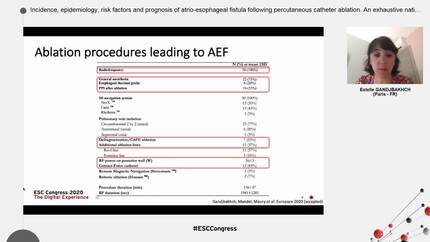
Catheter ablation is a common treatment for atrial fibrillation (AF). Atrial–oesophageal fistula (AOF) is a rare yet fatal complication of catheter ablation. Chest computed tomography (CT) is the diagnostic modality of choice but may be undiagnostic in up to 24% of cases.
We present the case of a 61-year-old male who presented with pleuritic chest pain, hypotension, fever, and coffee-ground emesis 20 days after cryoablation for AF. His chest CT was undiagnostic. Atrial–oesophageal fistula was diagnosed by injecting agitated saline into the nasogastric tube during a transthoracic echocardiogram (TTE) that showed bubbles in the left atrium and ventricle.
In the case presented, as often happens, the diagnosis of AOF was delayed for several days, during which the patient presented with septic shock and concomitant multiorgan failure. The high mortality rate associated with AOF is partially attributable to delayed diagnosis. As prompt surgical intervention offers the best chance of survival, a high level of suspicion is of the utmost importance. We suggest contrast-enhanced TTE as a potential diagnostic tool when a rapid and definitive diagnosis is crucial and CT is inconclusive. Since this procedure is not without risk, proper risk consideration and management are necessary.
Contributors

Ori Galante
Author
Dana Braiman
Author
Moti Haim
Author
Massimo Mapelli
Author
Enrique Garcia-Sayan
Author
Domenico Filomena
Author
Nikolaos Spinthakis
Author
Damien Farhad Nur Salekin
Author
You may be interested in