Inverse association between apolipoprotein C-II and cardiovascular mortality: role of lipoprotein lipase activity modulation
European Heart Journal


Abstract
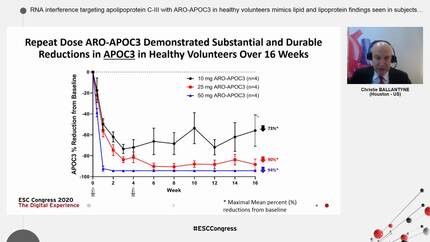
Apolipoprotein C-II (ApoC-II) is thought to activate lipoprotein lipase (LPL) and is therefore a possible target for treating hypertriglyceridemia. Its relationship with cardiovascular risk has not been investigated in large-scale epidemiologic studies, particularly allowing for apolipoprotein C-III (ApoC-III), an LPL antagonist. Furthermore, the exact mechanism of ApoC-II–mediated LPL activation is unclear.
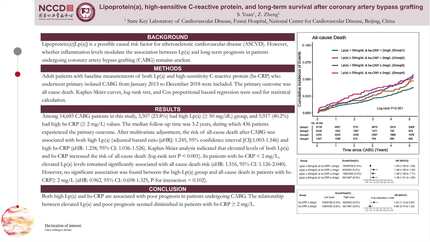
ApoC-II was measured in 3141 LURIC participants of which 590 died from cardiovascular diseases during a median (inter-quartile range) follow-up of 9.9 (8.7–10.7) years. Apolipoprotein C-II–mediated activation of the glycosylphosphatidylinositol high-density lipoprotein binding protein 1 (GPIHBP1)–LPL complex was studied using enzymatic activity assays with fluorometric lipase and very low-density lipoprotein (VLDL) substrates. The mean ApoC-II concentration was 4.5 (2.4) mg/dL. The relationship of ApoC-II quintiles with cardiovascular mortality exhibited a trend toward an inverse J-shape, with the highest risk in the first (lowest) quintile and lowest risk in the middle quintile. Compared with the first quintile, all other quintiles were associated with decreased cardiovascular mortality after multivariate adjustments including ApoC-III as a covariate (all
The present epidemiologic data suggest that increasing low circulating ApoC-II levels may reduce cardiovascular risk. This conclusion is supported by the observation that optimal ApoC-II concentrations are required for maximal GPIHBP1–LPL enzymatic activity.
Contributors

Günther Silbernagel
Author
Yan Q Chen
Author
Martin Rief
Author

Michael M Hoffmann
Author
Tatjana Stojakovic
Author
Andreas Stang
Author
Mark A Sarzynski
Author
Claude Bouchard
Author
Winfried März
Author
Yue-Wei Qian
Author
Robert J Konrad
Author
You may be interested in