Severity of Brugada syndrome disease manifestation and risk of new-onset depression or anxiety: a Danish nationwide study
EP Europace Journal


Abstract
Reduced psychological health is associated with adverse patient outcomes and higher mortality. We aimed to examine if a Brugada syndrome (BrS) diagnosis and symptomatic disease presentation were associated with an increased risk of new-onset depression or anxiety and all-cause mortality.
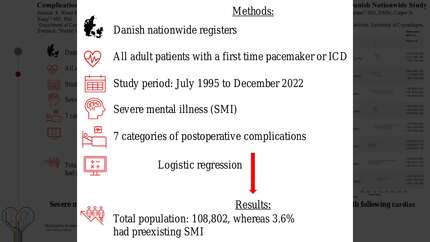
All Danish patients diagnosed with BrS (2006–2018) with no history of psychiatric disease and available for ≥6 months follow-up were identified using nationwide registries and followed for up to 5 years after diagnosis. The development of clinical depression or anxiety was evaluated using the prescription of medication and diagnosis codes. Factors associated with developing new-onset depression or anxiety were determined using a multivariate Cox proportional hazards regression model. Disease manifestation was categorized as symptomatic (aborted cardiac arrest, ventricular tachycardia, or syncope) or asymptomatic/unspecified at diagnosis. A total of 223 patients with BrS and no history of psychiatric disease were identified (72.6% male, median age at diagnosis 46 years, 45.3% symptomatic). Of these, 15.7% (35/223) developed new-onset depression or anxiety after BrS diagnosis (median follow-up 5.0 years). A greater proportion of symptomatic patients developed new-onset depression or anxiety compared with asymptomatic patients [21/101 (20.8%) and 14/122 (11.5%), respectively,
Approximately, one-sixth of patients with BrS developed new-onset depression or anxiety following a diagnosis of BrS. Symptomatic BrS disease manifestation was significantly associated with new-onset depression or anxiety.
Contributors

Johanna Krøll
Author


Peter Karl Jacobsen
Author
Christian Jøns
Author
Jens Haarbo
Author
Jens Kristensen
Author
Jens Brock Johansen
Author
Berit T Philbert
Author


Peter E Weeke
Author
You may be interested in