Abstract
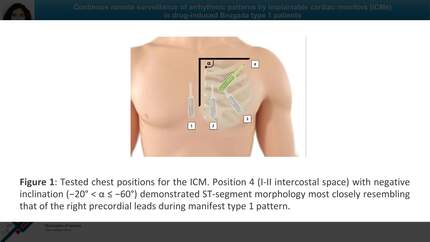
Thirty years after its first description, the knowledge regarding Brugada syndrome has greatly increased. Spontaneous type 1 ECG pattern (BrECG) is a well-defined prognostic marker in asymptomatic patients and is associated with a double risk of arrhythmic events during follow-up as compared to drug-induced ECG pattern. Due to the extreme variability of the ECG pattern over time, the spontaneous type 1 BrECG must be carefully sought, not only through periodic ECGs but especially with repeated 12-lead 24-h Holter monitoring, with V1 and V2 electrodes placed also on the second and third intercostal space, in order to explore the right ventricular outflow tract. 12-lead 24-h Holter should also be performed in all the patients with a dubious BrECG pattern even before the drug challenge with sodium channel blockers, which carries a low but definite risk of complications. In addition to spontaneous type 1, other electrocardiographic markers of increased arrhythmic risk have been described, such as first-degree AV block, QRS fragmentation, S wave in lead I and II, and increased QRS duration. The electrophysiological study in asymptomatic patients with a spontaneous ECG Brugada pattern is still under jury and further studies need to clarify its precise role.
Contributors

Natascia Cerrato
Author
Andrea Saglietto
Author
Domenico Caponi
Author
Leonardo Calò
Author
Carla Giustetto
Author
You may be interested in