Long-term risk of new-onset arrhythmia in ST-segment elevation myocardial infarction according to revascularization status
EP Europace Journal


Abstract
Emerging data show that complete revascularization (CR) reduces cardiovascular death and recurrent myocardial infarction in ST-segment elevation myocardial infarction (STEMI). However, the influence of revascularization status on development of arrhythmia in the long-term post-STEMI phase is poorly described. We hypothesized that incomplete revascularization (ICR) compared with CR in STEMI is associated with an increased long-term risk of new-onset arrhythmia.
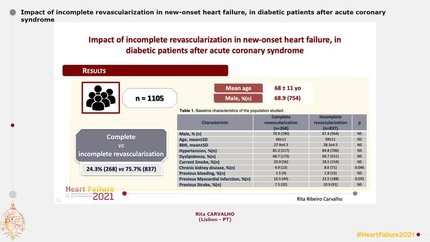
Patients with STEMI treated with primary percutaneous coronary intervention (PPCI) at Copenhagen University Hospital, Rigshospitalet, Denmark, with CR or ICR were identified via the Eastern Danish Heart registry from 2009 to 2016. Using unique Danish administrative registries, the outcomes were assessed. The primary outcome was new-onset arrhythmia defined as a composite of atrial fibrillation/flutter (AF), sinoatrial block, advanced second- or third-degree atrioventricular block, ventricular tachycardia/fibrillation (VT), or cardiac arrest (CA), with presentation >7 days post-PPCI. Secondary outcomes were the components of the primary outcome and all-cause mortality. A total of 5103 patients (median age: 62.0 years; 76% men) were included, of whom 4009 (79%) and 1094 (21%) patients underwent CR and ICR, respectively. Compared with CR, ICR was associated with a higher risk of new-onset arrhythmia [hazard ratio (HR), 1.33; 95% confidence interval (CI), 1.07–1.66;
Among patients with STEMI, ICR was associated with an increased long-term risk of new-onset arrhythmia and all-cause mortality compared with CR.
Contributors


Christian Jøns
Author
Reza Jabbari
Author

Niels Kjær Stampe
Author
Jawad H Butt
Author
Niels Thue Olsen
Author
Henning Kelbæk
Author


Frants Pedersen
Author

Thomas Engstrøm
Author
Peter Karl Jacobsen
Author
You may be interested in