Acute oesophageal safety and long-term follow-up of AI-guided high-power short-duration with 50 W for atrial fibrillation ablation
EP Europace Journal


Abstract
Pulmonary vein isolation using radiofrequency ablation is an effective treatment option for patients with symptomatic atrial fibrillation (AF). Application of high power over a short period of time (HPSD) is reported to create more efficient lesions and may prevent collateral thermal oesophageal injury. This study aims to compare efficacy and safety of two different HPSD ablation approaches using different ablation index settings.
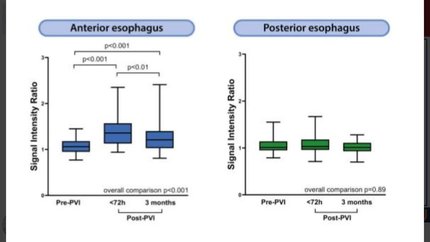
Consecutive patients undergoing AF ablation with HPSD (50 W; ablation index–guided) using the ThermoCool SmartTouch SF catheter were included. Patients were grouped by ablation protocol: ablation with target ablation index (AI) of 400 on the anterior left atrial wall vs. 300 at the posterior left atrial wall (AI 400/300) or AI 450/350 was performed upon the operator’s preference and compared. Peri-procedural parameters and complications were recorded, and incidences of endoscopically detected thermal oesophageal lesions (EDEL) analysed. Recurrence rates after a mean follow-up of 25 ± 7 months and reconnection patterns in patients undergoing redo procedures were investigated. A total of 795 patients (67 ± 10 years; 58% male; 48% paroxysmal AF) underwent a first AF ablation with HPSD (211 in group AI 400/300 and 584 in group 450/350). Median procedure time was 82.9 ± 24.6 min with longer ablation times in patients with target AI 400/300 due to higher intraprocedural reconnection rates, increased box lesions, and additional right atrial isthmus ablations. EDEL rates among target AI 400/300 procedures were significantly lower (3% vs. 7%;
High-power short-duration AF ablation with target AI of 400 for non-posterior wall and 300 for posterior wall lesions resulted in comparable long-term results compared to higher AI (450/350) ablations with significantly lower risk for thermal oesophageal lesions. Older age, larger LA size, persistent AF, and extra-PV ablation targets were identified in a multivariate analysis as independent risk factors for recurrences of atrial arrhythmias.
Contributors

Karin Nentwich
Author
Artur Berkovitz
Author
Elena Ene
Author
Kai Sonne
Author
Vitaly Zhuravlev
Author
Ivaylo Chakarov
Author
Sebastian Barth
Author

Michael Behnes
Author

Thomas Deneke
Author
You may be interested in