Improvement of global longitudinal strain following high-dose chemotherapy and autologous peripheral blood stem cell transplantation in patients with amyloid light-chain cardiac amyloidosis: a case report
European Heart Journal - Case Reports


Abstract
Cardiac amyloidosis (CA) is a secondary form of cardiomyopathy where abnormal accumulation of amyloid protein in the myocardial interstitium causes cardiac hypertrophy and myocardial fibrosis. If primary CA advances to heart failure, most patients do not survive for very long after the diagnosis.
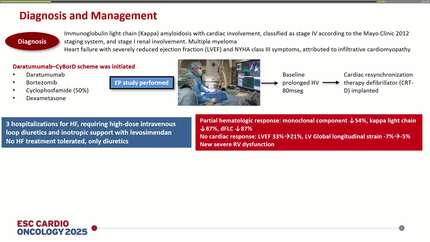
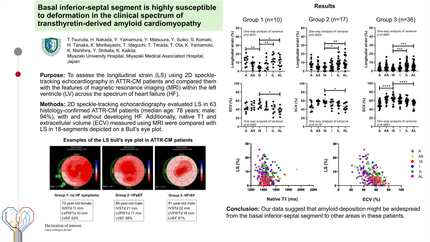
A 40-year-old man was admitted to our hospital for dyspnoea, progressive anaemia, and decreased appetite. He has diagnosed with amyloid light-chain (AL) amyloidosis. Although BD treatment (bortezomib + dexamethasone) and medical treatment were started, there was no sign of improvement. Then, high-dose chemotherapy followed by autologous peripheral blood stem cell transplantation (auto-PBSCT) was initiated. Pretreatment echocardiography revealed typical findings of CA, such as ventricular wall thickening, valvular thickening, diastolic dysfunction, and pericardial effusion. Global longitudinal strain (GLS) was significantly reduced, and bull's-eye mapping showed typical apical sparing. After auto-PBSCT, GLS gradually improved and was almost normal after 2 years. Other echocardiographic parameters, functional status, and laboratory data also showed that there was significant regression of CA.
Although the prognosis in primary CA is extremely poor, we achieved long-term survival in a patient with effective high-dose chemotherapy and auto-PBSCT. Global longitudinal strain may be a useful marker of prognosis, regression, and recovery.
Contributors

Ross Thomson
Author
Yukina Hirata
Author

Hirokazu Miki
Author

Matteo Cameli
Author
Riccardo Liga
Author
Savvas Loizos
Author
Mark Philip Cassar
Author
You may be interested in