Cervical spinal cord injury by a low-impact trauma as an unnoticed cause of cardiorespiratory arrest
European Heart Journal - Case Reports


Abstract
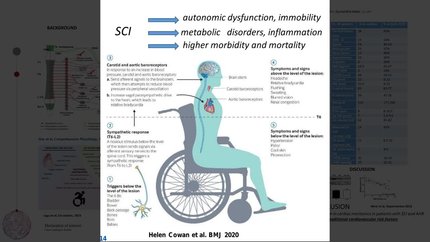
Cardiorespiratory arrest (CA) secondary to traumatic cervical spinal cord injury can occur in minor accidents with low-impact trauma and may be overlooked as the cause of CA in patients admitted in the coronary care unit.
We present two patients admitted to the coronary care unit because of suspected CA of cardiac origin. Both patients were found in CA with asystole, one after collapsing in a shopping mall and falling down a few steps and the other in the street next to his bicycle. They underwent early pharmacologically induced coma and hypothermia precluding neurological examination. Both patients remained in coma after rewarming, with preserved brainstem reflexes but absent motor response to pain. One patient had post-anoxic myoclonus in the face without limb involvement. In both patients, median nerve somatosensory evoked potentials demonstrated bilateral absence of thalamocortical N19 responses and abnormal cervicomedullary junction potentials (N13 wave). Extensive diagnostic work-up did not find a cardiac cause of the CA, pulmonary thromboembolism, or intracranial haemorrhage. In both patients, cervical spinal cord injury was diagnosed incidentally 5 and 6 days after CA, when a brain magnetic resonance imaging performed to assess post-anoxic brain injuries detected spinal cord hyperintensities with fracture and luxation of the odontoid. Both patients died 11 and 8 days after CA.
Low-impact traumatic cervical spinal cord injury should be considered in the diagnostic work-up of patients with CA of unknown cause.
Contributors

Gerard Mayà-Casalprim
Author
Jose Ortiz
Author
Ana Tercero
Author
David Reyes
Author
Álex Iranzo
Author
Joan Santamaria
Author
Carles Gaig
Author
Ross Hunter
Author
Richard Ang
Author
Tina Khan
Author
Max Sayers
Author
Peregrine Green
Author
You may be interested in