A case report of a young patient with both Brugada and long QT3 syndrome: between the hammer and the anvil
European Heart Journal - Case Reports


Abstract
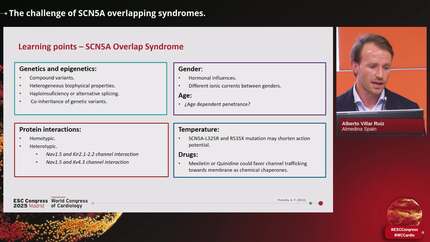
Brugada syndrome (BrS) is an inherited disorder associated with increased risk of ventricular arrhythmias and sudden cardiac death. The most common genetic alteration is a loss of function mutation of SCN5A gene. Several mutations in SCN5A gene were found to be associated with an overlap phenotype of both BrS and long QT3 (LQT3) syndrome.
We report of a 29-year-old man with familial LQT3 syndrome that was diagnosed at age 6 during evaluation of syncope. He has been treated for several years with Flecainide. Now presented with recurrent episodes of syncope. Electrocardiogram (ECG) upon admission was notable for Brugada type 1 pattern that was attenuated after Flecainide was discontinued. Genetic analysis revealed SCN5A 1790D>G mutation that is associated with overlap of LQT3 and BrS. Due to recurrent syncope and difficult management of both LQT3 and BrS, an implantable cardioverter-defibrillator was implanted together with beta-blockers treatment. The patient was discharged home with no evidence of Brugada type 1 pattern on his ECG. He had no further syncope or arrhythmias during 6 months of follow-up.
There are few reports describing the phenotypic overlap between LQT3 and BrS. Despite the confirmed genetic link between both syndromes, their management strategy is controversial. In particularly, the treatment with sodium channel blockers for LQT3 syndrome may increase the risk for arrhythmias in patients with coexisting BrS. The present case demonstrates the link between LQT3 and BrS and the difficult dilemma in the management of these patients.
Contributors

Yuval Konstantino
Author
Moti Haim
Author
Belinda Gray
Author
Richard Ang
Author
Debabrata Bera
Author
Carlos Minguito Carazo
Author
Ross Thomson
Author
You may be interested in