A case report of cardiogenic shock from takotsubo cardiomyopathy with left ventricular outflow tract obstruction: fundamental lessons in cardiac pathophysiology
European Heart Journal - Case Reports


Abstract
A subset of patients with takotsubo cardiomyopathy will develop significant dynamic left ventricular outflow tract (LVOT) obstruction leading to cardiogenic shock. However, traditional therapies for cardiogenic shock that focus on increased inotropy and afterload reduction can be detrimental in this situation.
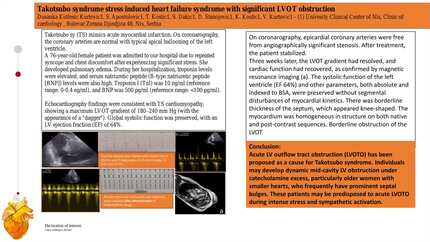
We describe a 71-year-old woman who presented to the emergency department with typical, substernal chest pain found to be hypotensive with ST-elevations in the lateral leads. Coronary angiography showed no significant coronary artery disease, but a left ventriculogram demonstrated takotsubo cardiomyopathy. Right heart catheterization revealed cardiogenic shock and elevated filling pressures. Haemodynamics and symptoms worsened with the initiation of dopamine and placement of intra-aortic balloon pump but improved with the initiation of phenylephrine. Follow-up echocardiogram demonstrated dynamic LVOT obstruction with concomitant severe mitral regurgitation (MR). The patient recovered in the intensive care unit for 5 days after successful weaning of phenylephrine and initiation of low-dose beta-blocker. Repeat echocardiogram 3 weeks later showed complete resolution of apical akinesis, LVOT obstruction, and MR.
Elucidating whether dynamic LVOT obstruction is contributing to cardiogenic shock physiology is paramount since the management radically differs depending on the presence or absence of obstruction. Corrective therapy focuses on reducing the LVOT gradient and includes fluid administration to improve preload, beta-blocker therapy to increase diastolic filling time, and vasopressors to raise afterload.
Contributors

Lawrence Ang
Author
Nicholas Phreaner
Author
Pierpaolo Pellicori
Author
Luca Arcari
Author
Alessia Gambaro
Author
Linh Ngo
Author
Mariame Chakir
Author
You may be interested in