Case report: Stepwise transition from subcutaneous treprostinil to epoprostenol in high-risk pulmonary arterial hypertension
European Heart Journal - Case Reports


Abstract
Idiopathic pulmonary arterial hypertension is associated with high morbidity and mortality. In recent years, the use of targeted therapies has led to an improvement in prognosis. Prostacyclin analogues treprostinil and epoprostenol require continuous subcutaneous or intravenous infusion and are generally administered in a stepwise approach. However, there are no clear recommendations for transition in high-risk patients requiring high doses of prostacyclin analogues.
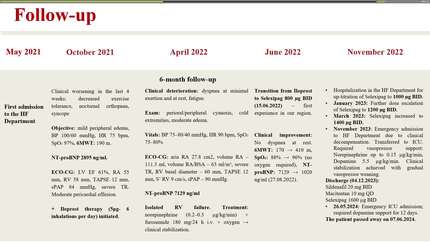
In this report, we describe the case of a 20-year-old woman under combined treatment with sildenafil, macitentan, and treprostinil who required transition from subcutaneous treprostinil therapy to intravenous epoprostenol due to erratic drug absorption and functional class progression. The transition was performed over 48 h in a stepwise approach reducing treprostinil dose 4 ng/kg/min every 3 h while increasing epoprostenol infusion 2 ng/kg/min until achieving a maintenance dose of 32 ng/kg/min. There were no side effects requiring changes in the infusion rate.
Patients with advanced pulmonary arterial hypertension may necessitate switching from subcutaneous treprostinil to epoprostenol. Although many protocols have been used to date, there are no guidelines to direct this process safely. This 48-h scheme based on the pharmacokinetic properties of each drug was successful and well-tolerated.
Contributors

Andrea Rodríguez
Author
Juan Alberto Gagliardi
Author
Alejandro Stewart Harris
Author
Yuichi Tamura
Author
George Giannakoulas
Author
Ciro Santoro
Author
Reshma Amin
Author
Ross Thomson
Author
You may be interested in