Transcatheter tricuspid valve-in-valve implantation for very early bioprosthetic tricuspid stenosis secondary to pacemaker lead entrapment: a case report
European Heart Journal - Case Reports


Abstract
Tricuspid stenosis (native and prosthetic) is rare. Redo-sternotomy for isolated tricuspid replacement is associated with a higher risk. The efficacy and durability of transcatheter valve implantation for severe tricuspid stenosis are unclear.
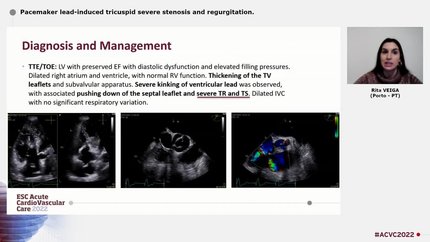
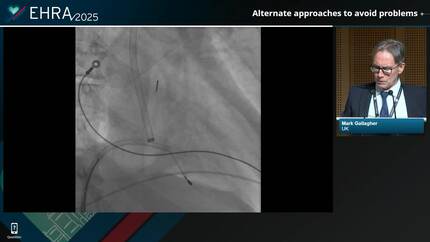
Successful tricuspid valve-in-valve implantation (Edwards 26 mm Ultra) was performed to exteriorize a retained, unextractable pacemaker lead causing very early surgical bioprosthetic valve dysfunction in a 66-year-old Caucasian woman. The original indication for surgical replacement was pacemaker lead-related severe tricuspid regurgitation. History of CABG and subsequent surgical replacement rendered the risk of a third sternotomy and open-heart surgery prohibitive.
Successful reduction in the severity of bioprosthetic tricuspid stenosis and improvement of right heart failure with transcatheter valve-in-valve implantation was observed. Percutaneous tricuspid valve implantation could be considered an alternative to redo-sternotomy for severe bioprosthetic tricuspid stenosis.
Contributors

Muhammad Hamza Saad Shaukat
Author
Conemaugh Health Company, LLC Johnstown , United States of America

Julia Stys
Author
Adam Stys
Author
Tomasz Stys
Author
Antonios Karanasos
Author
Adam Hartley
Author
Luigi Biasco
Author
Gal Tsaban
Author
Nida Ahmed
Author
You may be interested in