Atherosclerotic plaque regression in homozygous familial hypercholesterolaemia: a case report of a long-term lipid-lowering therapy involving LDL-receptor-independent mechanisms
European Heart Journal - Case Reports


Abstract
Homozygous familial hypercholesterolaemia (HoFH) is a rare and life-threatening genetic disease characterized by extremely elevated low-density lipoprotein cholesterol (LDL-C) levels, important xanthomatosis and increased risk of premature atherosclerotic cardiovascular disease. Management of HoFH at an early stage is recommended but conventional lipid-lowering therapies (LLTs) dependent on the LDL-receptor for clearance of LDL particles, are usually not sufficient. However, agents acting independently of the LDL-receptor, such as inhibitors of microsomal triglyceride transfer protein (MTP) or angiopoietin-like protein 3 (ANGPTL3), administered in combination, on top of standard-of-care LLT constitute a promising therapy for HoFH.
The present case describes a long-term (>10 years) follow-up of a 52-year-old woman with severe HoFH, who was treated with conventional lipid-lowering medications (i.e. statins and ezetimibe) for several years before experiencing the risks and benefits that were encountered with the use of LDL-receptor-independent agents (MTP and ANGPTL3 inhibitors). This combination therapy demonstrated a good long-term safety and efficacy profile, while continuous monitoring of hepatic enzymes (sometimes requiring dose adjustments) and fat accumulation is recommended when using lomitapide.
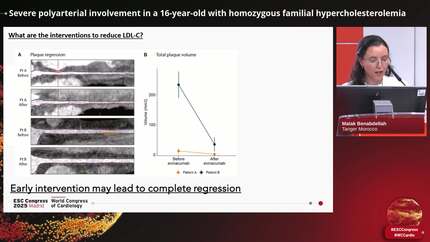
Treating this HoFH patient with an LLT involving the combination of MTP and ANGPTL3 LDL-receptor-independent inhibitors (lomitapide and evinacumab, respectively) showed remarkable improvement in LDL-C levels, disappearance of xanthomatosis and regression in atherosclerotic plaques. In addition to safety and efficacy, one should question the affordability and access hurdle that emerging combination of expensive therapies might constitute in the future for the payers. These challenges could eventually limit the clinical use of those innovative treatments despite their clinical benefit.
Contributors

Etienne Khoury
Author
Alex Lauzière
Author
Frederick J Raal
Author
John Mancini
Author
Daniel Gaudet
Author
ECOGENE-21 and Community gene medicine center, clinical lipidology unit Montreal , Canada
David Oxborough
Author
Georgios A Christou
Author
Roman Komorovsky
Author
Pok-Tin Tang
Author
Michael Waight
Author
You may be interested in