Synchronous atrioventricular sequential pacing utilizing conventional and leadless pacemakers in an elderly patient: a case report
European Heart Journal - Case Reports


Abstract
Leadless pacemakers present a viable alternative to conventional transvenous devices to mitigate the risk of lead- and/or pocket-related complications. In elderly patients who have encountered ventricular lead failures with transvenous pacemakers, this option may enable the delivery of atrioventricular synchronous pacing therapy, while obviating the requirement for lead extraction and lead-based pacemaker re-implantation.
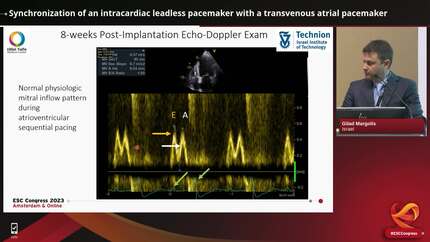
This case report describes the successful implantation of a leadless pacemaker in a 90-year-old who had undergone two dual-chamber permanent pacemaker implantation procedures with a failure of three of four previously implanted leads. Atrioventricular synchronous pacing was achieved, as the leadless device was able to track the atrial-paced rhythm from the pre-existing right-sided device.
In elderly patients who have encountered issues with transvenous pacemakers, alternative approaches should be considered to mitigate the risk of future complications. Leadless pacemakers may offer a low-risk solution, enabling the delivery of atrioventricular synchronous pacing therapy in such patient groups. Future studies should be designed to delineate whether these devices could be utilized as a first-line approach in certain situations.
Contributors

Neil Bodagh
Author
King's College London London , United Kingdom of Great Britain & Northern Ireland
Kevin Cheng
Author
William Eysenck
Author
Tom Wong
Author
Richard Ang
Author
Patrick Badertscher
Author
Carlos Minguito Carazo
Author
Nikolaos Spinthakis
Author
Michael Waight
Author
You may be interested in