Anti-interleukin-1 agents for pericarditis: a primer for cardiologists
European Heart Journal


Abstract
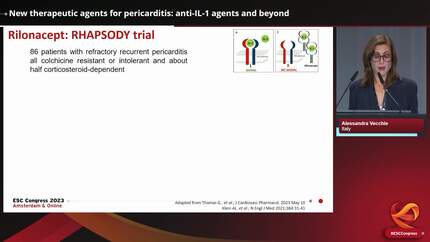
Anti-interleukin (IL)-1 agents have been developed for the treatment of autoinflammatory and rheumatic conditions, where overproduction of IL-1 is an important pathophysiologic process. IL-1α and IL-1β are the most studied members of the IL-1 family of cytokines and have the strongest proinflammatory effects. A naturally occurring antagonist (IL-1Ra) mitigates their proinflammatory effects. Overproduction of both IL-1α (released by inflamed/damaged pericardial cells) and IL-1β (released by inflammatory cells) is now a well-recognized therapeutic target in patients with recurrent idiopathic pericarditis. Currently, there are three available anti-IL-1 agents: anakinra (recombinant human IL-1Ra), rilonacept (a soluble decoy receptor ‘trap’, binding both IL-1α and IL-1β), and canakinumab (human monoclonal anti-IL-1β antibody). For patients with corticosteroid-dependent and colchicine-resistant recurrent pericarditis with evidence of systemic inflammation, as evidenced by elevated C-reactive protein, the efficacy and safety of anakinra (2 mg/kg/day up to 100 mg/day subcutaneously usually for at least 6 months, then tapered) and rilonacept (320 mg subcutaneously for the first day followed by 160 mg subcutaneously weekly) have been clearly demonstrated in observational studies and randomized controlled clinical trials. Severe side effects are rare and discontinuation rates are very low (<4%). The most common reported side effect is injection site reactions (>50% of patients). In this article, we describe the historical and pathophysiological background and provide a comprehensive review of these agents, which appear to be the most significant advance in medical therapy of recurrent pericarditis in the last 5 years.
Contributors




You may be interested in